
Nvidia CEO predicts trillions in AI infrastructure spending
 3 Min Read
Nvidia CEO Jensen Huang says trillions will be spent on AI infrastructure, as demand for generative AI fuels record investment in semiconductors and cloud computing.
-
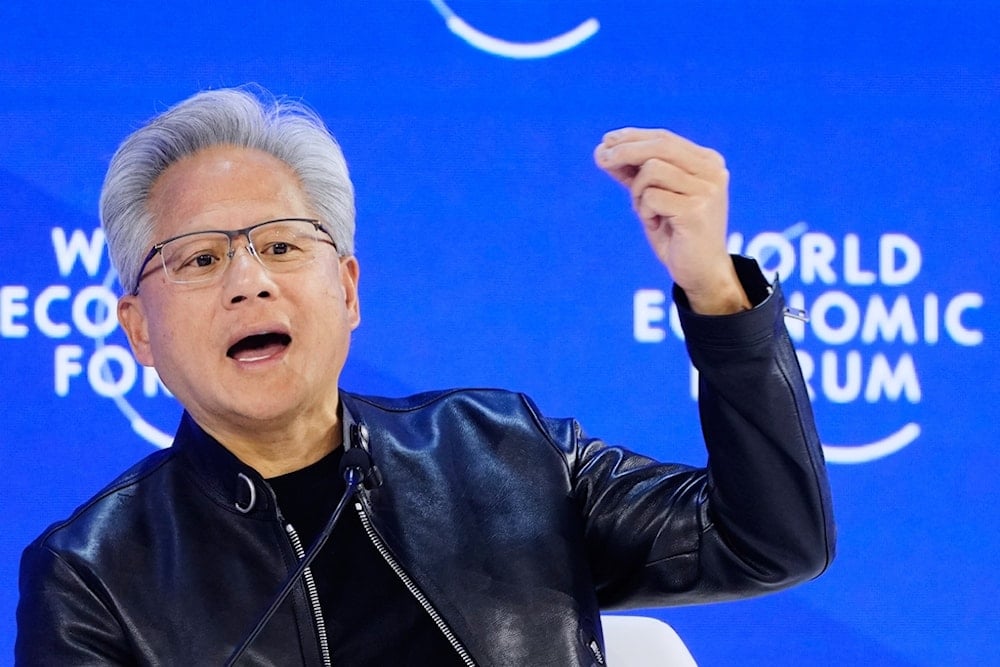
Nvidia founder and CEO Jensen Huang speaks during the Annual Meeting of the World Economic Forum in Davos, Switzerland, Wednesday, January 21, 2026. (AP Photo/Markus Schreiber)
Speaking at the World Economic Forum in Davos, Nvidia CEO Jensen Huang declared that the development of generative AI will require trillions of dollars in future investment. According to Huang, the AI boom is driving what he described as “the largest infrastructure buildout in human history.”
“We're now a few hundred billion dollars into it,” he said. “There are trillions of dollars of infrastructure that need to be built out,” spanning sectors such as energy, cloud computing, and electronics.
Nvidia has emerged as a dominant force in the global AI infrastructure race. Its graphics processing units (GPUs), originally designed for 3D gaming, now power the training and operation of large language models (LLMs) like OpenAI’s ChatGPT and Google Gemini.
The company’s market value surged to over $5 trillion in October, though it has since decreased by more than $600 billion. AI developers, including OpenAI, are pouring investment into building data centers packed with Nvidia’s GPUs, preparing for massive demand for AI services across industries.
Read more: Economic confrontation tops WEF global risks report for 2026
Industry Leaders Respond to AI Investment Concerns
Huang addressed rising concerns from some observers who warn that the current AI investment wave resembles a bubble. He disagreed, explaining that the scale of investment is a necessary foundation for future layers of the AI economy.
“The AI bubble comes about because the investments are large. And the investments are large because we have to build the infrastructure necessary,” Huang said. “I think the opportunity is really quite extraordinary.”
He also pushed back on fears that generative AI would destroy jobs, instead suggesting it would generate new types of work as AI tools enter workplaces.
Microsoft CEO Satya Nadella, who spoke at the Davos summit a day earlier, offered a more cautious take. He emphasized the need for equitable access to AI’s benefits in order to prevent a future crash.
“For this not to be a bubble by definition, it requires that the benefits of this are much more evenly spread,” Nadella said. Still, he expressed confidence in AI’s potential, calling it a technology that would “diffuse faster” than previous innovations and contribute to “economic growth all around the world.”
Although the 2026 Davos summit was partly overshadowed by a transatlantic dispute over US President Donald Trump’s comments on Greenland, the focus on AI remained strong. As tech leaders and policymakers gathered, the consensus was clear: generative AI and the AI infrastructure supporting it, will be central to global economic development in the years ahead.


