
Launch of ChatGPT Health marred by scrutiny in Australia
 5 Min Read
A recent poisoning case linked to AI-generated dietary guidance has renewed concerns over the safety, transparency, and regulation of ChatGPT Health as it rolls out in Australia.
-
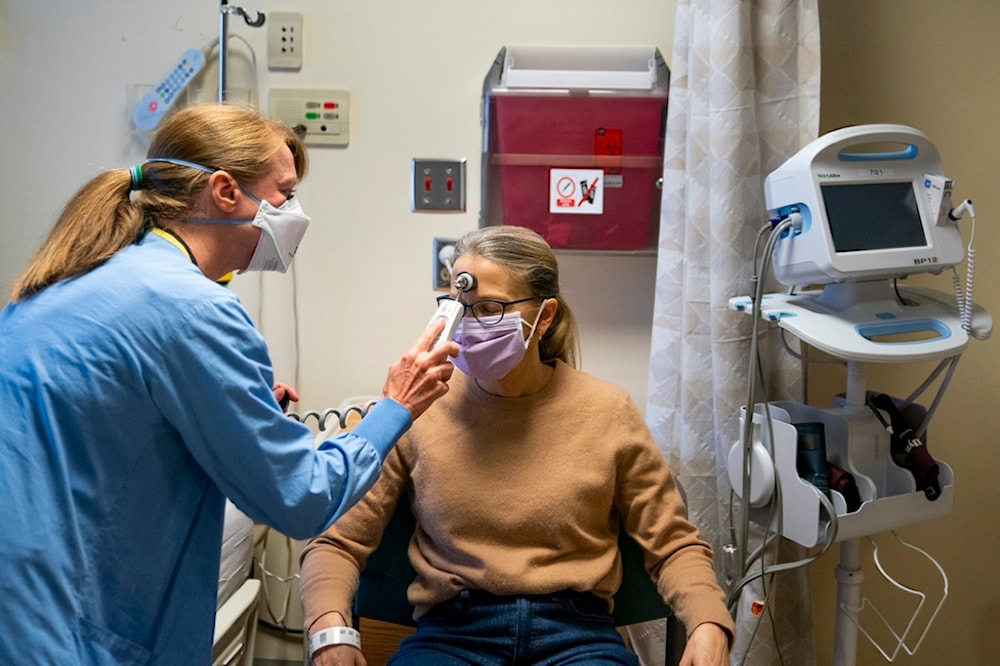
Registered nurse Erika Obrietan examines patient Kathleen Jade before her third dose of an experimental breast cancer vaccine at University of Washington Medical Center - Montlake, Tuesday, May 30, 2023, in Seattle. (AP Photo/Lindsey Wasson)
A recent medical emergency involving a man who developed severe hallucinations after following dietary guidance generated by artificial intelligence has intensified scrutiny over the launch of ChatGPT Health in Australia, according to The Guardian.
The case involved a 60-year-old man with no prior psychiatric history who arrived at an emergency department claiming his neighbour was poisoning him. Within a day, his condition deteriorated rapidly, with escalating hallucinations and an attempt to flee the hospital.
Clinicians later determined that the man had been consuming sodium bromide daily, an industrial chemical commonly used in cleaning, water treatment, and laboratory settings. He had purchased the substance online after ChatGPT suggested it could replace table salt, driven by his concern over the health effects of sodium intake. Medical staff concluded that he was suffering from bromism, a condition caused by bromide accumulation in the body, which can trigger hallucinations, confusion, impaired coordination, and stupor.
Health boundaries
The incident has prompted warnings from experts as ChatGPT Health, a health-focused version of the AI platform developed by OpenAI, becomes available to a limited number of users in Australia. The tool allows people to connect medical records and wellness applications to receive more tailored responses, with broader access offered through a waitlist.
Speaking to The Guardian, Alex Ruani, a doctoral researcher specialising in health misinformation at University College London, said the product risks blurring boundaries between general information and medical advice.
“ChatGPT Health is being presented as an interface that can help people make sense of health information and test results or receive diet advice, while not replacing a clinician,” Ruani said.
“The challenge is that, for many users, it’s not obvious where general information ends and medical advice begins, especially when the responses sound confident and personalised, even if they mislead.”
No independent evaluation
Ruani said there had been too many “horrifying” examples of ChatGPT “leaving out key safety details like side effects, contraindications, allergy warnings, or risks around supplements, foods, diets, or certain practices”.
He also raised concerns about the lack of independent evaluation of the system. “What worries me is that there are no published studies specifically testing the safety of ChatGPT Health,” Ruani said. “Which user prompts, integration paths, or data sources could lead to misguidance or harmful misinformation?”
OpenAI has said that ChatGPT Health was developed using an internal testing framework called HealthBench, which employs doctors to evaluate AI responses to health-related queries. Ruani criticised the process, arguing that “the full methodology used by HealthBench, and its evaluations, are ‘mostly undisclosed, rather than outlined in independent peer-reviewed studies’”.
“ChatGPT Health is not regulated as a medical device or diagnostic tool. So there are no mandatory safety controls, no risk reporting, no post-market surveillance, and no requirement to publish testing data.”
AI Health Divide
In a statement to Guardian Australia, an OpenAI spokesperson said the company had worked with more than 200 physicians across 60 countries “to advise and improve the models powering ChatGPT Health”.
“ChatGPT Health is a dedicated space where health conversations stay separate from the rest of your chats, with strong privacy protections by default,” the spokesperson said.
According to OpenAI, health data is encrypted and protected by default, with sharing limited to cases where users give consent or where required under the company’s privacy policy.
Broader concerns have also been raised by consumer advocates. Dr Elizabeth Deveny, chief executive of the Consumers Health Forum of Australia, said financial pressures and long waits to access doctors were driving people toward AI tools.
She said ChatGPT Health could support people managing established chronic conditions and help users explore general wellbeing strategies. She also noted that AI’s capacity to provide responses in multiple languages “provides a real benefit to people who don’t have English proficiency”.
However, Deveny warned that many users may treat AI-generated guidance as authoritative medical advice, while major technology companies advance faster than governments in shaping standards for privacy and data use.
“This is not a small not-for-profit experimenting in good faith. It’s one of the largest technology companies in the world.
“When commercial platforms define the norms, the benefits tend to flow to people who already have resources, education, and system knowledge. The risks fall on those who do not.”
AI Guardrails
Deveny said government inaction has left patients largely on their own in navigating the rapid social changes brought by AI.
“We need clear guardrails, transparency and consumer education so people can make informed choices about if and how they use AI for their health,” she said.
“This isn’t about stopping AI. It’s about acting before mistakes, bias, and misinformation are replicated at speed and scale, in ways that are almost impossible to unwind.”
Read more: AI & unemployment fears: Why dire predictions are yet to materialize


