
White House forms AI task force to assess risks, opportunities
 3 Min Read
The White House has formed an AI task force to assess artificial intelligence risks and opportunities and examine federal oversight and regulation.
-
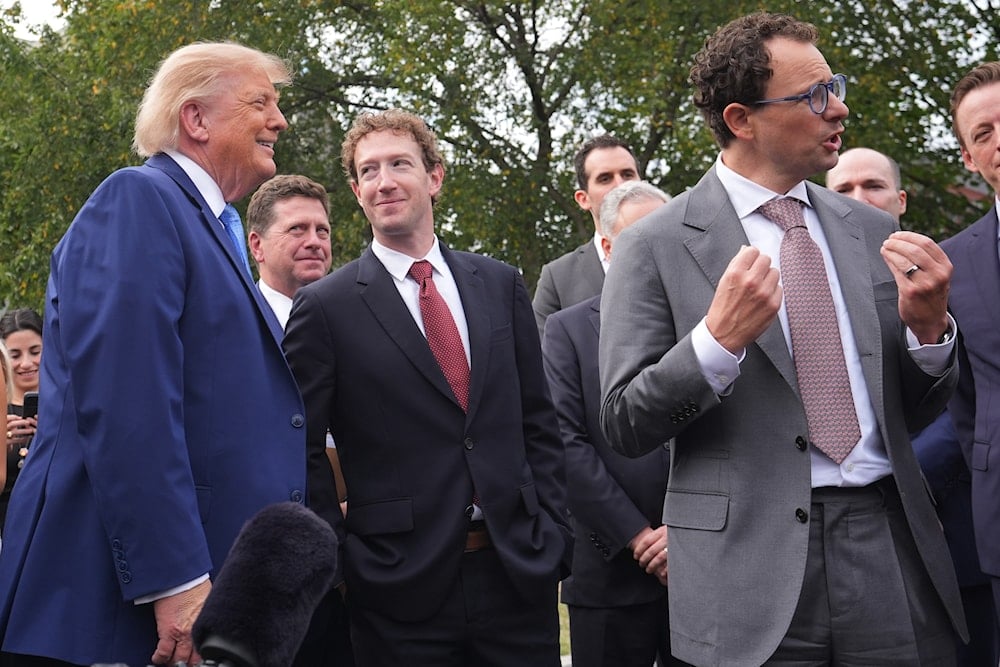
President Donald Trump and Meta CEO Mark Zuckerberg listen as Dario Amodei speaks to reporters at the White House in Washington, Tuesday, Sept. 29, 2026, after meeting with top executives of AI firms (AP)
The White House has formed a task force to assess the risks and opportunities posed by artificial intelligence and to examine the federal government's role in overseeing the rapidly developing technology, The Wall Street Journal reported on Saturday.
The body, named the "Super Intelligence Force," is chaired by Director of National Intelligence Jay Clayton and will have 120 days to prepare its findings.
According to the report, the task force will examine existing laws and potential steps Congress could take while working with the technology industry to identify risks and opportunities.
Its charter calls for developing plans to respond to threats posed by advanced AI, while avoiding regulations that could hinder innovation and competition.
The task force will also review how breaches, hacks, model jailbreaks, and other AI-related incidents are reported to the government, and recommend ways to improve the federal response under existing authorities.
Trump, Tech executives meet ahead of Task Force formation
The task force's formation follows a September 29 White House meeting between President Donald Trump and technology executives, including OpenAI President Greg Brockman, Anthropic CEO Dario Amodei, and Nvidia CEO Jensen Huang. Trump and the AI chiefs signed a voluntary safety accord in the meeting.
Trump called the agreement "morally binding", even though the commitments are not required by law, and his administration has resisted mandatory rules for the technology.
Trump and House Speaker Mike Johnson announced the agreement after a lunch meeting with executives including Elon Musk of SpaceX, Mark Zuckerberg of Meta, Dario Amodei of Anthropic, Jensen Huang of Nvidia, Greg Brockman of OpenAI, and Sundar Pichai of Google.
"It's almost like a constitution, in a way," Trump said, flanked by the executives. Asked whether the deal was binding, he said, "I think it's morally binding."
Forbes reported that Trump, Musk, Zuckerberg, Huang, Amodei, Pichai, and Brockman signed the document.
What the accord contained
The one-page "White House Accord on Super Intelligence," which Trump posted on Truth Social, commits the companies to "four layers of controls and audits" to ensure their models behave as intended.
These include internal evaluations, audits by an external firm, and reviews by each company's board of directors. The signatories also agreed to meet regularly to set standards and best practices for the safety of their systems.
The text says it "may make sense to codify these steps into laws or regulations" over time, but that the companies will implement them regardless of whether they are required to. Axios reported that details on how the standards will work in practice have yet to be spelled out.
Trump said the executives also discussed forming a 10-person committee to "watch over the enterprise" and that he plans to name an AI czar within three or four days. He credited the industry with "tremendous self-policing," saying companies have an incentive to police themselves and each other because their own businesses are at stake.


