
White House restricts OpenAI GPT-5.6 rollout to approved US users
 3 Min Read
The Trump administration is limiting OpenAI’s GPT-5.6 release to select US-approved organizations as Washington expands oversight of advanced AI model deployments.
-
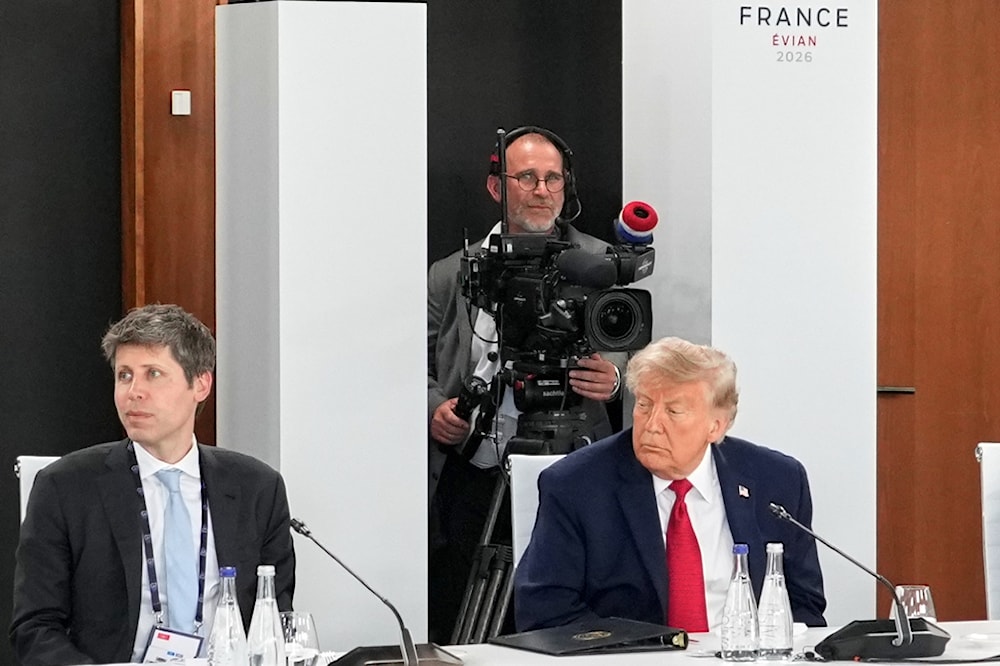
CEO of OpenAI Sam Altman and US President Donald Trump during a working session at the G7 summit in Evian-les-Bains, France, on June 17, 2026. (AP Photo/Thibault Camus)
The Trump administration has intervened in the rollout of OpenAI’s latest artificial intelligence model, restricting access to a limited group of US companies and organizations approved under federal oversight, according to people familiar with the discussions.
The decision marks a further expansion of government involvement in the deployment of frontier AI systems, as Washington moves to tighten controls over models deemed capable of advanced cyber or security-related functions.
The newest model, GPT-5.6, has not yet been publicly detailed by OpenAI. However, its release structure was reportedly altered following consultations with the White House and federal technology and cybersecurity agencies.
Read more: Florida first US state to sue OpenAI over ChatGPT safety failures
GPT-5.6 rollout shifted to restricted release model
According to sources, OpenAI initially intended to release GPT-5.6 as a general-use model, but revised its approach following discussions with the Office of Science and Technology Policy and the Office of the National Cyber Director.
The model will now be accessible only to selected US entities approved by the administration, signaling a shift toward controlled distribution of high-capability AI systems.
A memo attributed to OpenAI CEO Sam Altman and reported by The Information indicated that while the restricted release was not the company’s preferred approach, it may form part of a broader framework for future model deployments.
The White House has not publicly detailed the scope of its intervention but confirmed it is working with leading AI firms to develop shared approaches for managing advanced systems.
Expanding regulatory framework for AI systems
The intervention comes amid broader efforts by the US government to establish oversight mechanisms for rapidly advancing AI technologies, particularly those with potential cybersecurity applications.
Earlier this month, US President Donald Trump signed an executive order outlining voluntary pre-release review procedures for powerful AI systems. The order encourages companies to submit advanced models for government evaluation before public deployment.
The policy is intended to assess potential risks to national security, financial systems, and other critical infrastructure, although key implementation details remain under development.
Read more: OpenAI claims breakthrough in decades-old math problem
Industry uncertainty over evolving rules
The emerging regulatory approach has generated uncertainty across the AI sector, as companies navigate shifting expectations regarding model release procedures and government review requirements.
Some industry observers have noted that the lack of clear and stable guidelines may complicate development timelines and product launches, particularly as firms compete in a rapidly accelerating technological race.
Debate has also intensified over how to balance innovation with national security concerns, as AI systems become increasingly capable of performing complex cybersecurity-related tasks.
Previously, Anthropic suspended access to two of its advanced artificial intelligence systems following an order by US authorities citing national security concerns. "The net effect of this order is that we must abruptly disable Fable 5 and Mythos 5 for all our customers to ensure compliance," the company said in a statement.


