
Why is Washington turning its sights back on Cuba?
-
 Leila Nezirevic
- 7 Jun 2026 10:50
- 1 Shares
 9 Min Read
As Cuba grapples with energy shortages, economic hardship, and growing international isolation, Washington has intensified pressure on the island once again. While US officials frame their policy as a response to regional security concerns and democratic deficits, critics argue the renewed campaign reflects a broader effort to reassert US influence in Latin America at a time of shifting geopolitical alliances and declining American dominance in its traditional sphere of influence.
-
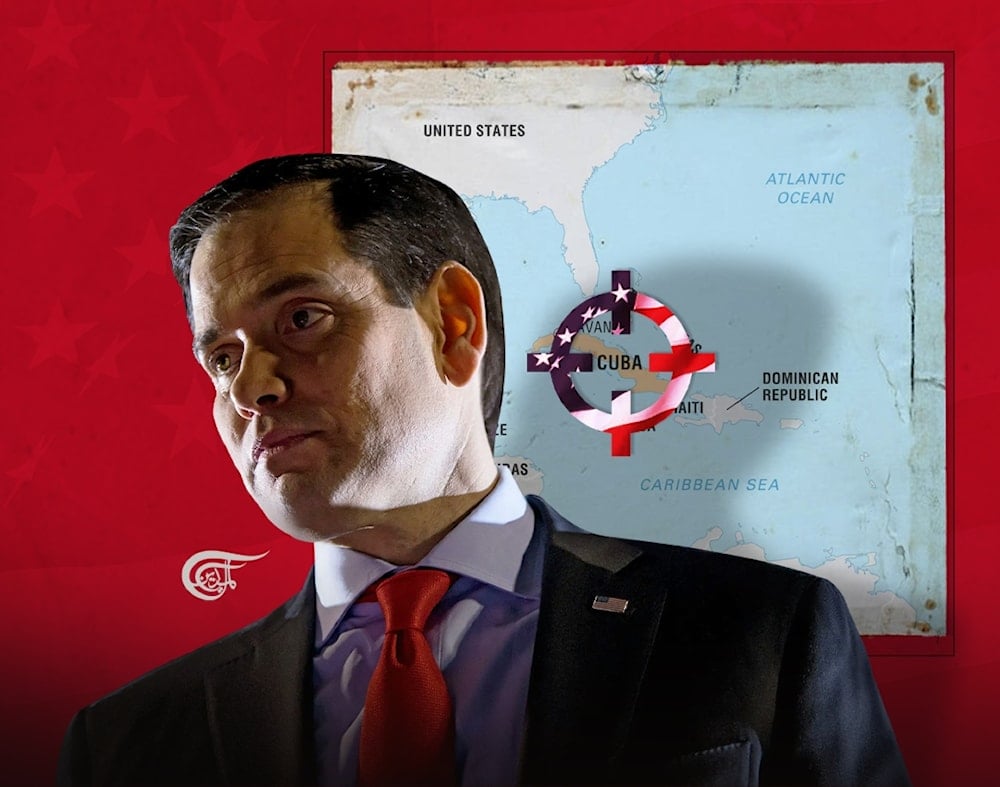
Cuba has once again become a focal point in a broader struggle over influence, sovereignty, and power in Latin America. (Al Mayadeen English; Illustrated by Zeinab el-Hajj)
For much of the past decade, Cuba appeared to have slipped down Washington's list of foreign policy priorities.
Global attention was consumed by strategic competition with China, the conflict in Ukraine, escalating tensions in the Middle East, and domestic political divisions within the United States itself. Yet despite these competing challenges, Havana has once again found itself at the center of a renewed US pressure campaign.
The latest measures come at a particularly difficult moment for Cuba. The island is facing severe fuel shortages, recurring power outages, inflation, and the continuing economic effects of decades of sanctions and restrictions. The hardships have fueled public frustration and accelerated migration, with hundreds of thousands of Cubans leaving the country in recent years in search of economic opportunities elsewhere.
Against this backdrop, the timing of Washington's renewed focus raises important questions. Why now? Why has Cuba re-emerged as a priority after years in which US policymakers appeared preoccupied with other global crises?
According to Richard Lapper, author and a leading expert on Latin America, the answer lies in a combination of geopolitical shifts, domestic US politics, and Cuba's current vulnerabilities.
"There are three major reasons," Lapper told Al Mayadeen English.
The first, he argues, is a broader transformation in US foreign policy under President Donald Trump.
"Since Trump's election, there's obviously been a shift in the focus of US foreign policy, and it's become much more heavy-handed towards the Latin American region, towards its own sphere of influence. And that's in line with a more realpolitik approach towards foreign policy in general."
Lapper's assessment suggests that Cuba's renewed prominence is not an isolated development but part of a wider strategic recalibration taking place across the Western Hemisphere.
A return to Washington's backyard?
For many observers, the most striking aspect of Washington's renewed approach to Latin America is how familiar it appears.
Lapper, who is an author of several books, including Lula! The Man the Myth and a dream of Latin America, points to a doctrine that has shaped US policy in the region for more than two centuries.
"The original policy was called the Monroe Doctrine from the early 19th century, where the US rejected influence from outside the Western hemisphere in Latin America."
The Monroe Doctrine, first articulated in 1823, established the principle that outside powers should not interfere in the affairs of the Americas. Over time, however, it evolved into a justification for repeated US interventions throughout Latin America and the Caribbean.
From military occupations and covert operations to support for coups and regime-change efforts, the doctrine provided ideological cover for Washington's assertion of regional dominance.
According to Lapper, elements of that thinking appear to be resurfacing.
"And, you know, that's faded, that doctrine. But Trump, in a way, has reestablished it."
The significance of this observation extends far beyond Cuba.
Over the last two decades, China has dramatically expanded its economic footprint across Latin America. Chinese investment has flowed into infrastructure projects, mining operations, telecommunications networks, transportation systems, and energy development throughout the region.
For Washington, this expansion has generated growing concern.
"I think it's a more general shift in the stance, being more conscious of the rise of Chinese influence in particular," Lapper said.
Importantly, he does not believe the United States is reacting to any sudden surge of Chinese or Russian activity in Cuba itself.
"I don't think the US is responding to a kind of contingent rise in Chinese or Russian presence in Cuba."
Instead, Cuba appears to have become part of a broader effort by Washington to reassert influence in a region that it has historically regarded as its strategic backyard.
For critics of US foreign policy, this raises difficult questions about sovereignty and self-determination. Is the renewed pressure on Havana truly about security concerns, or does it reflect a deeper discomfort with the emergence of alternative centers of power throughout Latin America?
The Rubio factor and the politics of exile
Geopolitics alone does not explain Washington's approach.
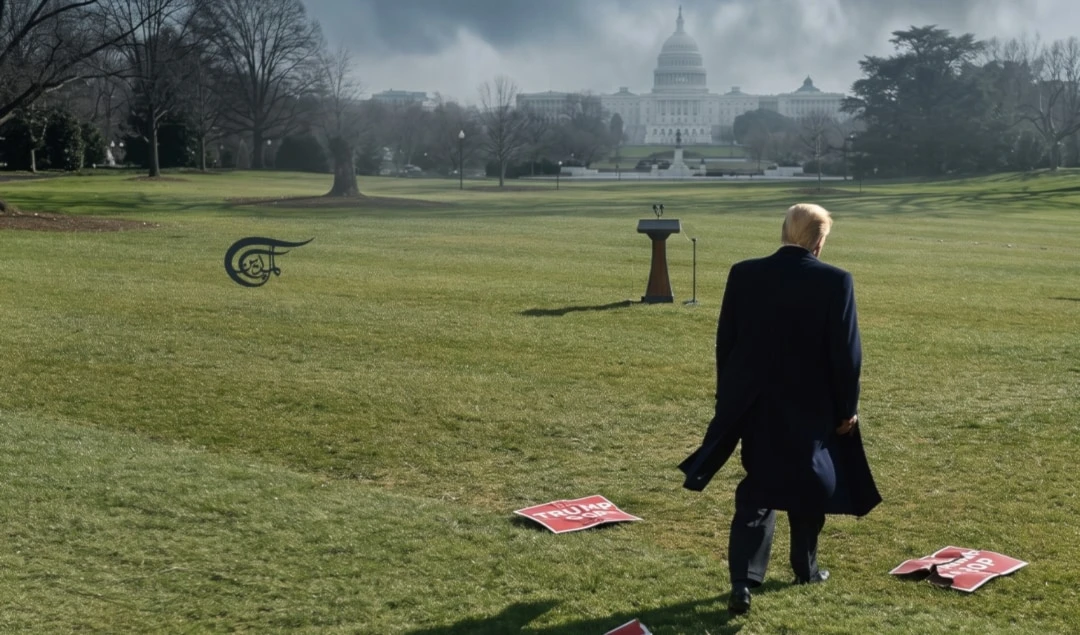

According to Lapper, domestic political considerations remain a crucial part of the story.
One of the most influential figures shaping US policy toward Cuba is Secretary of State Marco Rubio.
"Marco Rubio is the, you know, he's of Cuban American extraction. His family were exiled from Cuba, I think shortly after the takeover in 1959."
Rubio's personal and political history has long informed his approach toward Havana.
Lapper describes him as a leading figure within a hardline political current that continues to advocate regime change in Cuba.
"And he's part of a hard-line lobby in the US heavily based in Florida, but is determined to try to get the regime change in Cuba."
The Cuban exile community has played an important role in US politics for decades.
Following the 1959 revolution, thousands of Cubans fled the island, many settling in Florida. Over time, the community developed significant political influence, particularly within the Republican Party but also across the broader US political establishment.
Lapper argues that their influence remains substantial.
"The exiled Cuban community, particularly the original exiles who left, who lost businesses and property, you know, back in the early 1960s, they remain, one way or another, a powerful voice in the US and it's very difficult for parties, both Republicans and Democrats, to cross that lobby."
Florida's electoral importance has only reinforced this dynamic.
For decades, maintaining a hardline position toward Cuba has often been viewed as politically advantageous, regardless of whether sanctions and pressure campaigns have achieved their stated objectives.
As a result, Cuba policy frequently reflects not only foreign policy calculations but also domestic electoral considerations.
Exploiting Cuba's moment of weakness
While political and geopolitical factors are important, Lapper believes Cuba's current economic condition is equally significant.
The island is facing one of the most severe crises since the collapse of the Soviet Union.
A key factor has been the weakening of its long-standing relationship with Venezuela. For years, Venezuelan oil helped sustain Cuba's energy infrastructure and provided an economic lifeline during periods of hardship.
That arrangement has become increasingly fragile.
"The most important fact so far of this new foreign policy stance has been the big change in Venezuela in January," Lapper explained.
According to him, the consequences for Cuba have been severe.
"What’s happened since the changeover in Venezuela has been that Cuba has found it very difficult to get enough diesel fuel for its energy plants."
The result has been prolonged blackouts affecting millions of people.
"There's been this terrible series of blackouts; the country's essentially deprived of electricity."
Lapper believes Washington recognizes that Cuba is currently more vulnerable than it has been in years, "Cuba is extremely weak."
He also argues that Havana can no longer rely on the same level of external support it once received.
"I suppose in addition that weakness is more important because Cuba's traditional allies are less and less interested in bailing it out."
Russia remains heavily focused on the conflict in Ukraine. China faces its own strategic challenges. Meanwhile, relations with parts of Europe have become increasingly strained.
Yet while critics of the Cuban government point to structural economic problems, others argue that any assessment of Cuba's difficulties must account for the cumulative impact of more than six decades of US sanctions.
Sanctions, pressure, and competing narratives
Perhaps no aspect of US-Cuba relations generates more controversy than sanctions. Washington has long argued that economic pressure is necessary to encourage “political reform” and change. Critics counter that sanctions primarily harm ordinary citizens.
Lapper acknowledges that sanctions have had a significant impact, "Economic sanctions by the US have clearly had an impact over time."
The blockade has restricted trade, limited access to international financing, complicated foreign investment, and imposed significant costs on the Cuban economy over generations.
The annual United Nations vote condemning the US embargo has repeatedly demonstrated the extent of international opposition to the policy. Nevertheless, Washington has maintained its position. The result is a debate that remains as polarized today as it was decades ago.
What comes next for Cuba?
Despite the renewed pressure campaign, Lapper does not believe Cuba sits at the center of Washington's strategic agenda. "It's not what Trump is thinking about."
He argues that larger geopolitical concerns continue to dominate US decision-making. "The big issue for the US is the Strait of Hormuz and the situation with Iran."
Even so, Cuba remains a factor in broader regional calculations.
Lapper believes Washington will seek to maintain pressure while avoiding a complete collapse that could trigger mass migration.
"If they drive it too far too quickly, there's going to be a huge crisis in migration."
That risk has shaped US policy toward Cuba for decades.
Successive administrations have sought to pressure Havana while preventing instability severe enough to generate large-scale migration across the Florida Straits.
For that reason, Lapper believes Washington's objectives may be more limited than some assume.
"They want to keep Cuba weak and defensive and ... force them into a deal."
Whether such a strategy succeeds remains uncertain.
What is clear is that Cuba has once again become a focal point in a broader struggle over influence, sovereignty, and power in Latin America.
More than sixty years after the revolution transformed the island and altered the geopolitical landscape of the Americas, the fundamental questions remain remarkably similar: How much independence can Cuba maintain in the face of sustained external pressure? And to what extent is Washington prepared to tolerate alternative political and economic models within a region it has long regarded as its own sphere of influence?
As the latest chapter in US-Cuba relations unfolds, those questions remain as relevant as ever.


