
EU considers freezing Russian oil price cap driven by US war on Iran
 4 Min Read
The EU is considering freezing its Russian oil price cap as the US war on Iran and the Strait of Hormuz closure drive energy prices sharply higher.
-
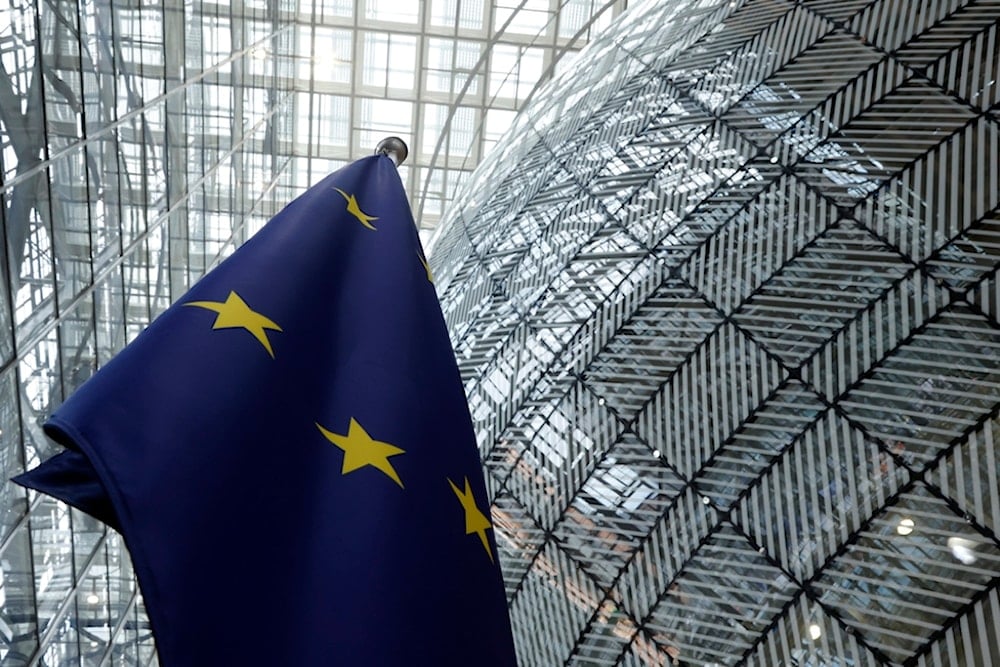
The European Union flag stands inside the atrium at the European Council building in Brussels on June 17, 2024 (AP)
The European Union is considering freezing its price cap on Russian oil as soaring energy prices driven by the ongoing US-Israeli war on Iran threaten to automatically raise the threshold under the bloc's sanctions regime, Bloomberg reported, citing people familiar with the discussions.
The current cap, set at $44.10 per barrel under a dynamic mechanism adopted last year, is scheduled for review later this summer. However, officials are examining options to suspend automatic increases after oil prices surged following the effective closure of the Strait of Hormuz, a critical global energy shipping route.
The proposal is being discussed as part of the EU's 21st sanctions package against Russia, which aims to further restrict Moscow's energy revenues while tightening enforcement against sanctions evasion networks.
Sanctions policy facing challenges
The EU adopted a dynamic pricing mechanism last year that automatically adjusts the Russian oil cap every six months to remain 15% below the average market price of Russian Urals crude.
Under current market conditions, the next review could raise the cap to at least $65 per barrel, according to people familiar with the deliberations. That would exceed the previous $60 threshold jointly adopted by the Group of Seven nations and potentially weaken pressure on Russian oil revenues.
To avoid that outcome, officials are weighing several options, including freezing the cap at its current level, suspending automatic adjustments until the end of the year, or limiting any increase to $60.
New sanctions package targets Russian revenues
The proposed price cap decision forms part of a broader sanctions package expected to be formally presented in early June.
Other measures under consideration include sanctions on additional banks, oil traders, refineries, and cryptocurrency operators in third countries that Brussels believes are helping Russia circumvent existing restrictions.
The EU is also considering sanctions against roughly 20 more vessels associated with Russia's so-called shadow fleet.
Officials are reportedly examining plans to eventually extend those measures to vessels carrying liquefied natural gas, limiting Russia's ability to establish a similar network for LNG exports.
EU seeks tighter enforcement against sanctions evasion
Brussels has already sanctioned hundreds of vessels linked to Russian energy exports and is now considering measures targeting companies and ships that provide services to those tankers.
However, a full ban on maritime services remains unlikely in the upcoming package, as several member states continue to oppose the move due to concerns about energy market volatility and the lack of broader G7 backing.
More restrictions planned on technology and trade
Additional proposals include new trade restrictions on critical minerals, metals, ores, and technologies used in Russia's aerospace and drone sectors.
The bloc is also considering export controls on around two dozen companies in China, India, Turkey, and Central Asia that are accused of supplying Russia with restricted goods used in weapons production.
The measures would further expand the EU's efforts to close loopholes that allow sanctioned goods to reach Russia through third countries.
Debate continues over frozen Russian assets
Separately, the EU is exploring options to protect the clearing house Euroclear after a Russian court ruling opened the possibility of asset seizures linked to frozen Russian state funds.
The bloc has already extended the freeze on approximately €210 billion in Russian central bank assets, most of which are held through Euroclear.
EU officials maintain that the assets will remain immobilized until the war ends and Russia pays reparations to Ukraine, although several member states continue to oppose proposals to confiscate the funds outright.
Discussions are also continuing on additional measures, including potential visa restrictions targeting former soldiers, according to people familiar with the talks.
Read more: Putin arrives in China for Xi talks as gas pipeline deal takes focus


