
Gold hits one-month high as markets anticipate US de-escalation
 4 Min Read
Markets interpreted Trump’s remarks as a sign that Washington may be seeking an exit from a war
-
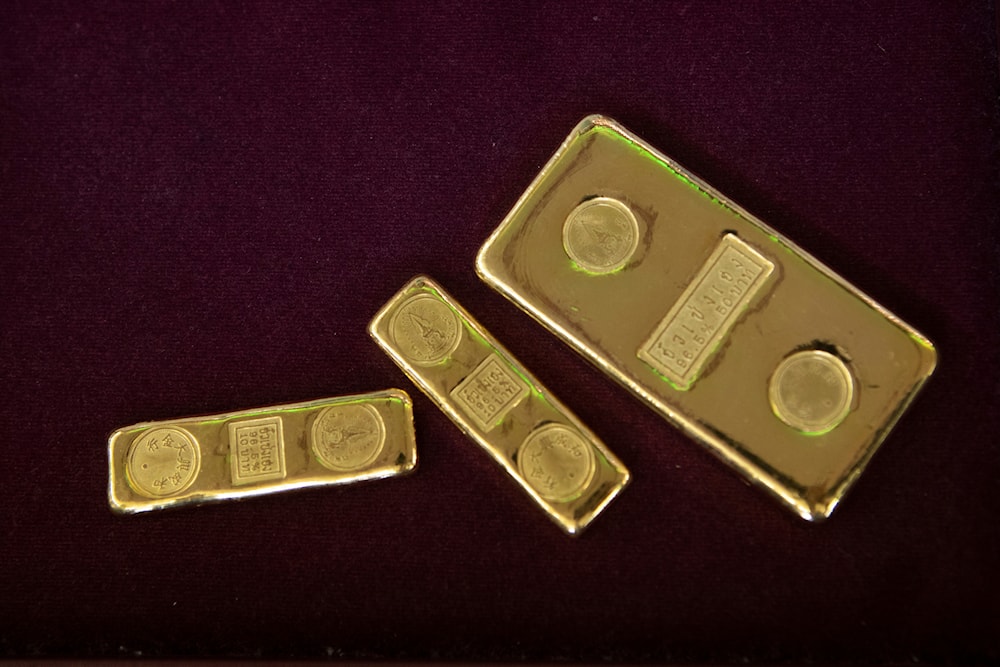
In this April 16, 2020, file photo, a customer puts gold bars in a basket for sale to a gold shop in Bangkok, Thailand (AP)
Gold prices surged to a one-month high on Wednesday as investors increasingly anticipated that Washington could be forced to de-escalate its five-month aggression against Iran, easing the energy and inflationary pressures generated by the war.
According to data cited by Reuters, spot gold rose 2.2% to $4,164.13 per ounce by 0836 GMT, its highest level since July 7, while US gold futures advanced 1.7% to $4,223.60.
The rally followed remarks by US President Donald Trump claiming that his administration had held "very good discussions" with Iran throughout Tuesday.
Tehran, however, has rejected suggestions that it is engaged in direct negotiations with Washington, maintaining that the current diplomatic efforts concern arrangements with Oman over commercial navigation through the Strait of Hormuz.
Iranian officials have also stressed that no agreement can be concluded under US military threats, accusing Washington of obstructing progress while attempting to portray Tehran’s diplomatic engagement with regional states as a response to American pressure.
Markets nevertheless interpreted Trump’s remarks as a sign that Washington may be seeking an exit from a war that has disrupted energy supplies, driven oil prices higher, and intensified inflationary pressure inside the United States.
Iranian leverage eases inflation fears
The decline in US bond yields reflected growing expectations that an end to Washington’s attacks and threats against Iran could reduce pressure on energy markets and restore greater stability to shipping routes in the Gulf.
Iran’s ability to influence navigation through the Strait of Hormuz has provided Tehran with considerable strategic leverage, demonstrating that continued US escalation carries substantial costs for global trade, Western economies, and American households.
"There are increasing signs of a Gulf ceasefire deal, which means Treasury yields are moving lower on easing inflation worries, which helps make non-yielding assets like gold more attractive," said Jamie Dutta, a market analyst at trading platform Nemo.money.
The yield on the benchmark 10-year US Treasury note fell to a one-week low, while the dollar remained under pressure.
The market reaction suggested that investors increasingly expect Washington to retreat from its escalation rather than risk further disruptions to Gulf energy shipments and a deeper rise in US consumer prices.
A weaker dollar also makes gold and other commodities priced in the US currency more affordable for buyers holding other currencies.
Gold does not generate interest, meaning that falling bond yields reduce the advantage of holding interest-bearing assets and increase demand for bullion.
US economic data in focus
Investors are also awaiting new US labor-market figures for further indications of the Federal Reserve’s monetary policy direction.
Traders placed the probability of a September interest-rate increase at 59%, down from 67% one day earlier, according to the CME FedWatch Tool.
The decline reflected easing expectations of additional monetary tightening as markets assessed whether a reduction in US-Iran tensions could curb the energy-driven inflation produced by Washington’s war.
Federal Reserve Bank of Kansas City President Jeff Schmid said on Tuesday that some form of monetary tightening remained necessary to return "too high" inflation to the central bank’s 2% target.
Some analysts nevertheless expect further interest-rate increases to eventually place downward pressure on gold.
"Concerns about the Fed's credibility will probably ease as the central bank raises interest rates over the coming months. That would result in gold prices falling and settling below $4,000 per ounce before the end of this year," said Hamad Hussain, a climate and commodities economist at Capital Economics.
Attention has now shifted to the ADP employment report, due at 1215 GMT, and the July nonfarm payrolls report scheduled for Friday.
Precious metals rally
Other precious metals also recorded sharp gains on Wednesday.
Spot silver climbed 3.3% to $61.49 per ounce, reaching its highest level since July 7.
Platinum rose 1.1% to $1,753.84 after touching its strongest level since mid-June earlier in the session.
Palladium gained 1.6% to $1,375.15 after reaching a two-month high.
Read more: Iran says Hormuz talks are only with Oman, not US


