
KSA books costly tankers to reroute oil as Hormuz traffic stalls
 4 Min Read
Saudi Arabia is rerouting crude exports through the Red Sea as disruptions in the Strait of Hormuz push tanker rates to record highs and drive oil prices above $100.
-
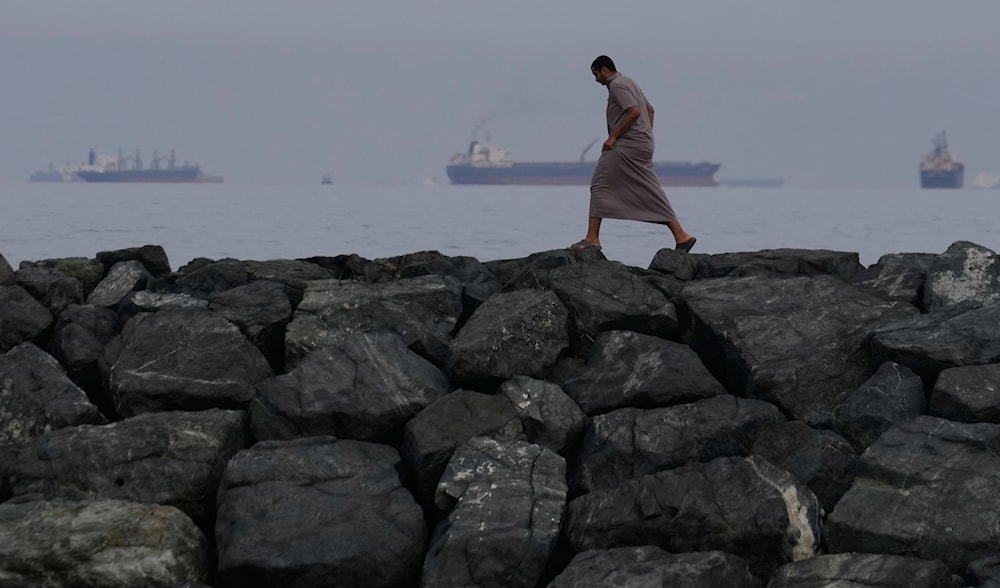
A man walks along the shore as oil tankers and cargo ships line up in the Strait of Hormuz, seen from Khor Fakkan, United Arab Emirates, Wednesday, March 11, 2026. (AP)
Saudi Arabia’s largest oil shipper has been booking tankers at exceptionally high rates as the kingdom scrambles to reroute crude exports through the Red Sea amid a near standstill in the Strait of Hormuz, Bloomberg reported.
The National Shipping Co. of Saudi Arabia, known as Bahri, has hired at least six very-large crude carriers in recent days to transport oil from the western port of Yanbu, according to industry fixture lists. A shipbroker and two vessel owners indicated the hiring spree may be even larger, with additional deals likely to emerge in the coming days, according to Bloomberg.
The move comes as Saudi Arabia accelerates efforts to divert oil supplies through a cross-country pipeline to the Red Sea, bypassing the Strait of Hormuz, where exports have been effectively halted due to the war on Iran. The strategic waterway normally handles roughly a fifth of global oil supplies.
Disruptions in Hormuz have driven crude prices above $100 per barrel multiple times this week, while tanker freight rates have surged to record levels.
24 supertankers booked at exorbitant prices
A fleet of oil tankers stretching from Singapore to the Red Sea is already heading toward Yanbu to load Saudi crude, according to vessel-tracking data compiled by Bloomberg. The flotilla includes at least 24 supertankers, although the charterers of all vessels have not yet been identified.
Many of Bahri’s recent bookings were reportedly made at about 450 industry-standard Worldscale points, equivalent to more than $450,000 per day, well above the previous benchmark peak of $300,000 per day before the war.
In a statement, Bahri said it continues to manage operations in line with established safety and operational protocols while closely monitoring developments in the region, but declined to comment on specific commercial matters.
Saudi Aramco’s chief executive said earlier this week that a key pipeline transporting crude roughly 1,200 kilometers across the kingdom to the Red Sea is expected to reach full capacity within days. The pipeline can carry up to 7 million barrels per day, although about 2 million barrels per day are allocated to domestic refineries.
While the diversion route will allow Saudi Arabia to move a substantial portion of its crude exports through the Red Sea, it will not fully replace volumes typically shipped through the Strait of Hormuz.
Ship-tracking data also indicate that Bahri had chartered at least five tankers before the war began, several of which now appear to be heading toward Yanbu as part of the rerouting effort.
ADNOC cuts crude volume by fifth
Meanwhile, Abu Dhabi National Oil Co. cut the volume of crude for its onshore partners by about a fifth for this month, although the flows will still go to a port outside the all-but-shuttered Strait of Hormuz, Reuters reported.
The state-owned oil producer told its equity partners that they will be permitted to load only 80% of their remaining Murban barrels for March, people familiar with the matter said. No specific reason was given, they said, asking not to be identified as they’re not allowed to speak publicly.
Still, the shipments of the United Arab Emirates’ flagship grade crude can still be picked up from the port of Fujairah, they said. Earlier, the company had said they would need to be collected from Jebel Dhanna, a facility located inside the Gulf, which would have required passage through the strait.


