
AfD MP calls for Russian gas as German storage levels fall low
 3 Min Read
AfD co-chair Alice Weidel calls for Russian gas imports and a return to nuclear energy as German gas storage levels fall to a record low.
-
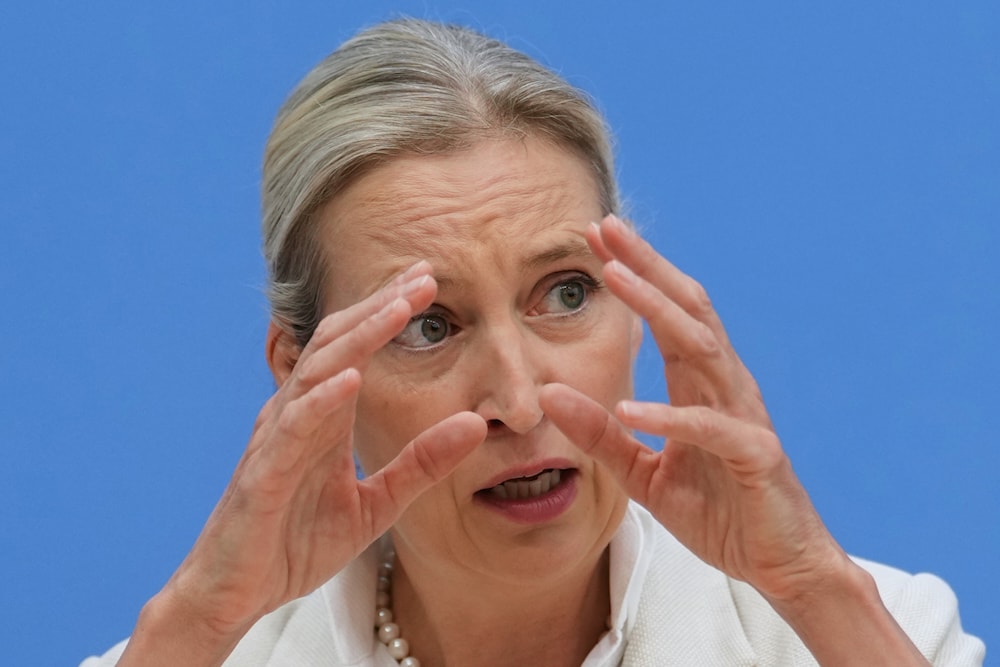
Co-leader of Alternative for Germany party, or AfD, Alice Weidel, attends a press conference in Berlin, Germany, Monday, Sept. 7, 2026 (AP)
Alice Weidel, co-chair of the opposition Alternative for Germany (AfD) party, called on Wednesday for resuming Russian gas imports and restarting nuclear power plants to address record-low gas storage levels.
"We must put an end to the failed energy transition and begin the return to nuclear energy. The key word is the resilience of our energy supply, which is why we also need affordable natural gas from Russia. We will work toward this in the interests of the German economy," Weidel said.
The lawmaker emphasized that Berlin "silently and passively" allowed the Nord Stream gas pipelines to be blown right before its eyes and continues to encourage the suspected organizers of this explosion in Kiev with billions in financial aid instead of preparing for the future resumption of supplies through the surviving pipelines.
German gas storage facilities were only 53% full as of early September, the lowest level recorded since record-keeping began 15 years ago, according to gas storage association INES. Weidel warned that this puts the country at risk of catastrophic shortages this winter.
INES said on Tuesday that German gas storage facilities could be completely depleted by the end of January in the event of a harsh winter, leading to fuel shortages for both industry and the public.
AfD wins Saxony-Anhalt election, fails to secure majority
This comes after the Alternative for Germany (AfD) surged to a commanding victory in Saxony-Anhalt, according to initial exit polls, delivering a major blow to Chancellor Friedrich Merz's Christian Democrats while leaving open the question of whether the party will actually be able to govern.
Early projections put the AfD on 44.5% of the vote, far ahead of the CDU on 18.5%. Die Linke followed with 9.5%, the Greens with 9%, and the Social Democrats with 8%, while the BSW appeared to clear the 5% threshold required to remain in the state parliament. Turnout reached a record 76.5%.
Despite the scale of the AfD's lead, the party may still fall short of an outright parliamentary majority, which its lead candidate, Ulrich Siegmund, has repeatedly described as a prerequisite for taking office. Siegmund has ruled out entering government with another party, while the CDU and Germany's other mainstream political forces continue to uphold the so-called Brandmauer, or firewall, against cooperation with the AfD.
The Saxony-Anhalt branch of the AfD has been classified as "rightwing extremist" by Germany's domestic intelligence agency.


