
Germany to approve record €52 bln defense procurement
 3 Min Read
German lawmakers are set to approve a €52 billion defense package covering equipment, vehicles, and air defense as Germany advances its goal to build Europe's strongest conventional armed forces.
-
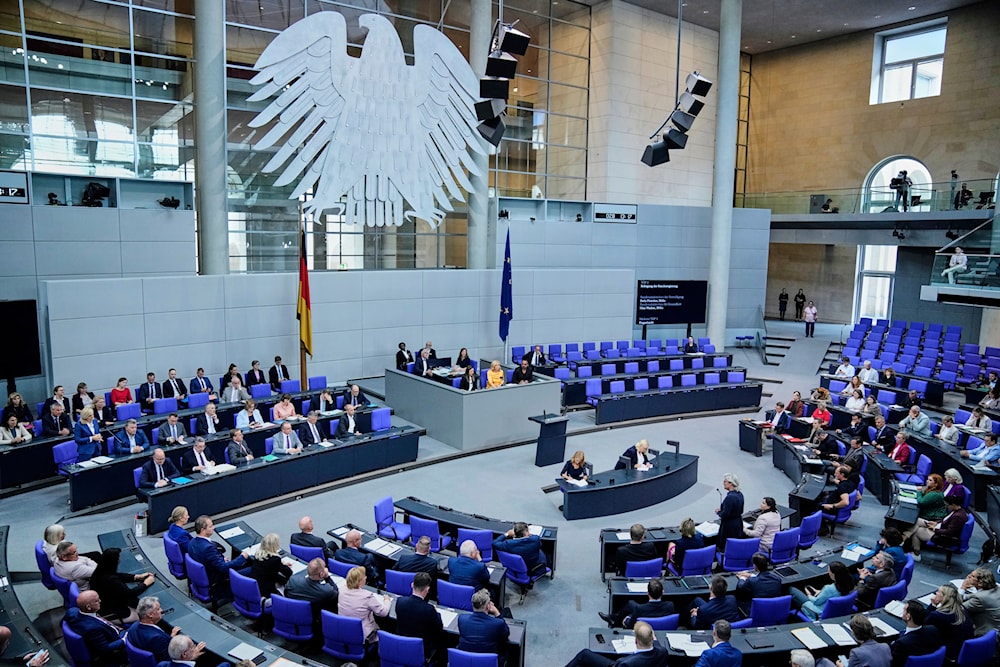
German Defense Minister Boris Pistorius answers questions of lawmakers during a meeting of the German federal parliament, Bundestag, at the Reichstag building in Berlin, Germany, Wednesday, Sept. 10, 2025. (AP Photo/Ebrahim Noroozi)
Germany's parliament is preparing to greenlight 29 major military contracts totaling €52 billion next week, marking the largest single-session defense authorization in the nation's history.
The move represents a pivotal moment in Berlin's ambitious campaign to rebuild the Bundeswehr, Germany's armed forces, into Europe's most formidable conventional military force.
The procurement package spans essential military infrastructure, from basic soldier equipment to advanced weapons systems. Lawmakers will review contracts worth €22 billion allocated for fundamental military supplies and uniforms, €4.2 billion designated for Puma infantry fighting vehicles, €3 billion earmarked for Arrow 3 air-defense systems, and €1.6 billion committed to surveillance satellite technology, according to sources with knowledge of the proposals.
-
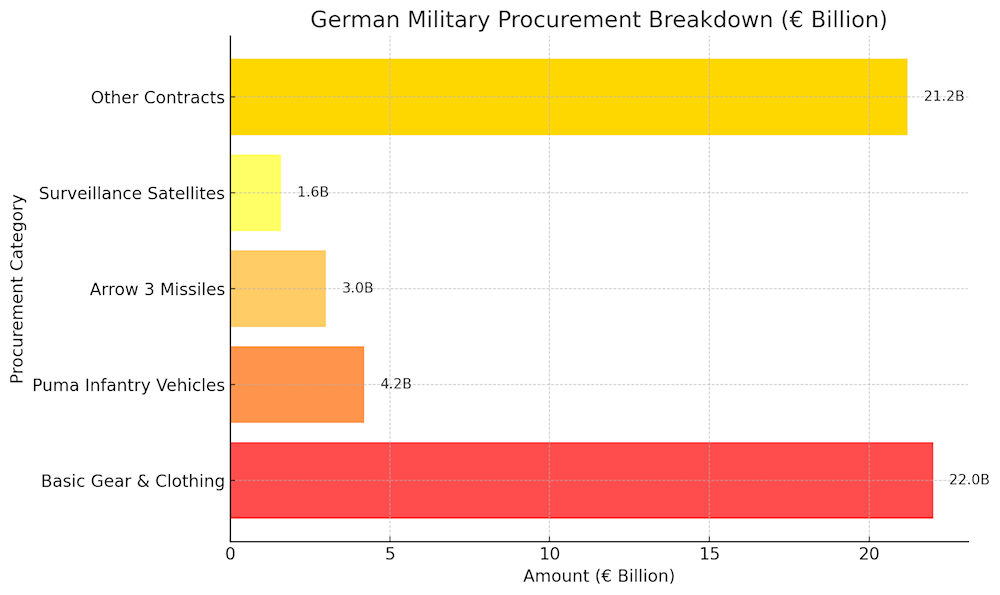
German military procurement breakdown (Info from Bloomberg, visualized by Al Mayadeen English)
This parliamentary session will set records both in scale and monetary value, surpassing any previous Bundestag budget committee approval for defense acquisitions.
The procurement surge stems from Germany's Zeitenwende, or "turning point," an initiative launched after the onset of the Russia-Ukraine war. This paradigm shift ended decades of military underfunding that left the Bundeswehr plagued by equipment shortages affecting anything from ammunition stockpiles to basic personal gear.
Financial architecture supporting defense growth
Chancellor Friedrich Merz, continuing the trajectory established by predecessor Olaf Scholz, has intensified Germany's defense commitment. During a televised town hall meeting on Monday, Merz articulated the philosophy underpinning this expansion, emphasizing deterrence through strength.
"It’s very simple, I repeat the same sentence over and over again: We want to be able to defend ourselves, so that we never have to defend ourselves," Merz said.
Germany's military spending has experienced extraordinary acceleration. From approximately €50.4 billion in 2022, defense expenditures are projected to exceed €108 billion by 2026. This dramatic increase relies on dual funding mechanisms: the standard federal defense budget and a specially created €100 billion Sondervermögen (Special Fund) designed to circumvent constitutional debt restrictions.
-
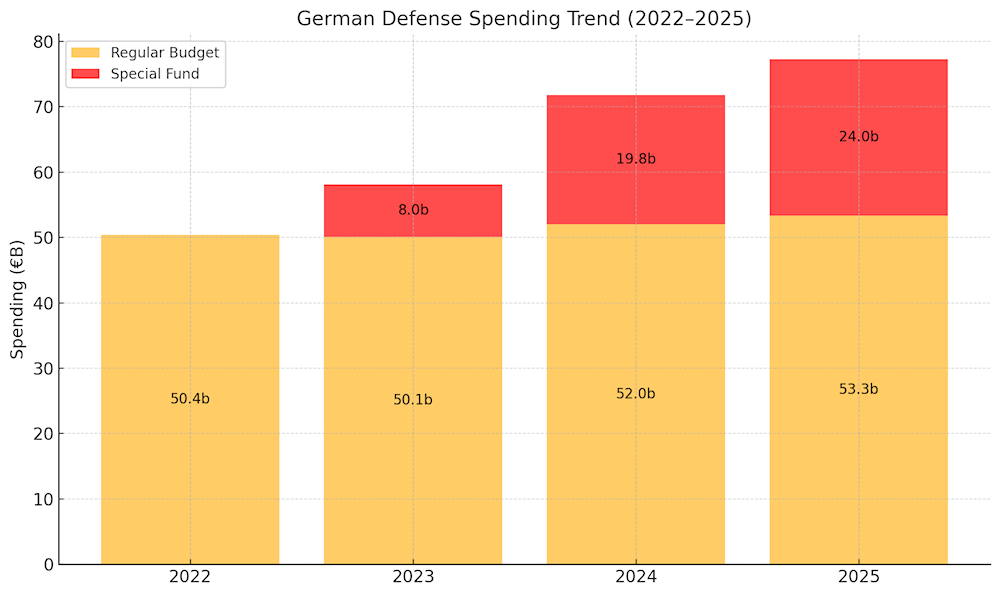
German defense spending over the years, 2022-2025 (Source: German Government websites, visualized by Al Mayadeen English)
Strategic procurement balances domestic and international suppliers
The contracts distribute work across German manufacturers and foreign partners. Rheinmetall and Franco-German consortium KNDS will deliver the Puma fighting vehicles, maintaining Germany's robust domestic defense industrial base. Meanwhile, the Arrow 3 system will be procured from Boeing and Israel Aerospace Industries.
Domestic champions like Rheinmetall, ThyssenKrupp Marine Systems, and Hensoldt provide land systems, naval platforms, and sensor technology. Meanwhile, US suppliers furnish F-35 fighters and Patriot missile defenses.
NATO commitments
Merz's coalition government aims to reach NATO's enhanced 3.5% GDP defense spending commitment by 2029, six years ahead of the alliance's 2035 deadline. This aggressive timeline underscores Germany's determination to establish credible deterrence capabilities amid Europe's transformed security environment.
As the Special Fund depletes by 2027, sustaining these elevated spending levels will require substantially higher regular budget allocations, presenting significant fiscal challenges for future governments committed to maintaining Germany's position as a cornerstone of European defense.


