
EU finalizes US trade pact under pressure from Trump
 4 Min Read
The European Union approved implementation of its trade agreement with the United States after months of pressure from US President Donald Trump and threats of higher tariffs on European exports.
-
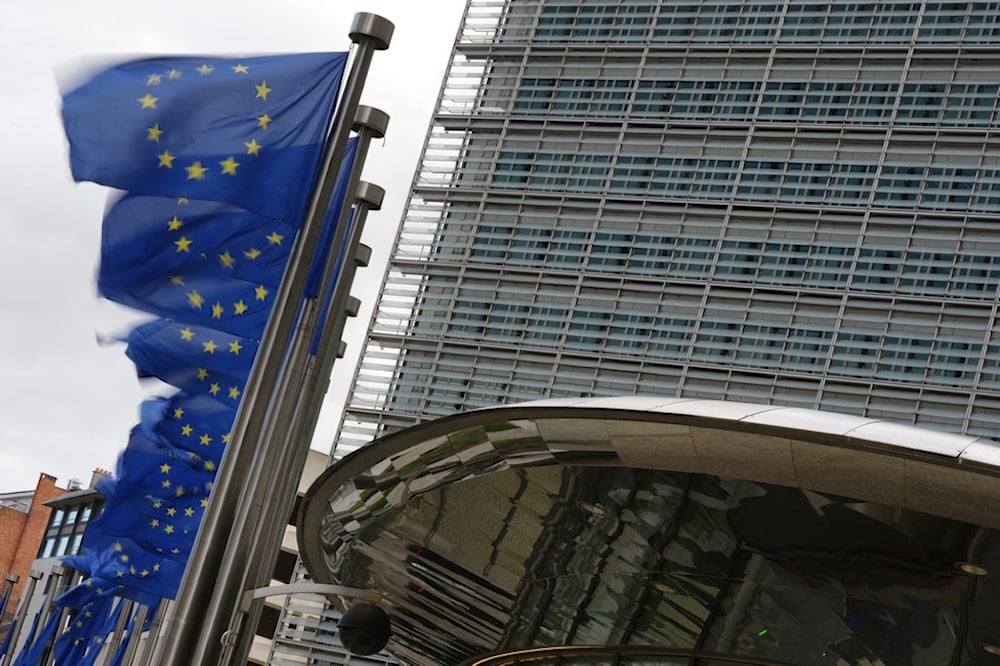
European Union flags flap in the wind outside EU headquarters in Brussels, Tuesday, May 12, 2026. (AP Photo/Virginia Mayo)
European Union lawmakers and member states reached a final agreement early Wednesday to implement the bloc’s trade pact with the United States, nearly a year after the deal was first signed.
The breakthrough came following sustained pressure from US President Donald Trump, who had threatened new tariff increases if the agreement was not ratified before July 4.
The accord, reached last July between Washington and the European Commission, set tariffs on most European exports to the United States at 15% while requiring the EU to gradually remove duties on most US imports.
However, implementation had stalled for months amid political disputes inside Europe and mounting tensions with Washington.
Negotiators from the European Parliament and EU member states reportedly held overnight talks before finalizing the agreement several hours after midnight.
Trump threats loomed over negotiations
The agreement places the European Union on course to meet Trump’s deadline and avoid additional tariffs that Washington had threatened to impose on European exports.
Trump had warned the bloc it could face “much higher” tariffs if the deal remained delayed, while also pledging to raise duties on European cars and trucks from 15% to 25%.
The pressure campaign reflected broader tensions in transatlantic economic relations since Trump returned to office and escalated protectionist trade measures targeting multiple US trading partners.
The earlier US tariff wave, including measures on steel, aluminum, and automobile components, forced European governments to accelerate efforts to diversify trade relations beyond Washington.
Still, EU officials acknowledged the bloc could not risk a prolonged rupture with the United States, which remains the EU’s largest trading partner, accounting for approximately €1.6 trillion in economic exchange.
Read more: NATO at a breaking point: Europe pushes back as US pressure mounts
EU includes safeguards against future US measures
The final agreement includes provisions allowing the European Commission to suspend preferential tariff arrangements if Washington violates the deal or adopts measures targeting European industries.
According to the finalized text, Brussels can activate a suspension mechanism if the United States disrupts trade and investment relations or discriminates against EU economic operators.
The agreement also contains safeguards allowing the EU to respond to sudden increases in US imports deemed harmful to domestic European producers.
However, European negotiators reportedly softened several earlier demands that Washington had opposed.
One key concession gives the United States until the end of the year to remove additional tariffs exceeding 15% on steel components, instead of requiring immediate removal as a condition for implementation.
Internal European tensions delayed ratification
The European Parliament had already granted conditional approval to the agreement in March, but divisions persisted over how far the bloc should accommodate Washington’s demands.
The process was further complicated by disputes linked to Trump’s foreign policy positions, including tensions surrounding Greenland and legal challenges inside the United States over the administration’s tariff authority.
European lawmakers had initially pushed for stronger enforcement mechanisms to protect the bloc from future unilateral US trade measures.
Despite those concerns, EU officials ultimately prioritized avoiding a deeper transatlantic trade confrontation.
Cyprus Energy, Commerce and Industry Minister Michael Damianos, whose country currently holds the rotating EU presidency, said the agreement demonstrated that the bloc was fulfilling its commitments.
“Maintaining a stable, predictable, and balanced transatlantic partnership is in the interest of both sides,” he said.
Read more: 74% of EU citizens hold negative view of US, poll finds


