
Germany approves record $58 billion defense package for Bundeswehr
 3 Min Read
Germany’s Bundestag Budget Committee approves a historic $58 billion defense package, including Puma vehicles, Arrow-3 missile systems, and gear for expanding the Bundeswehr to 460,000 personnel.
-
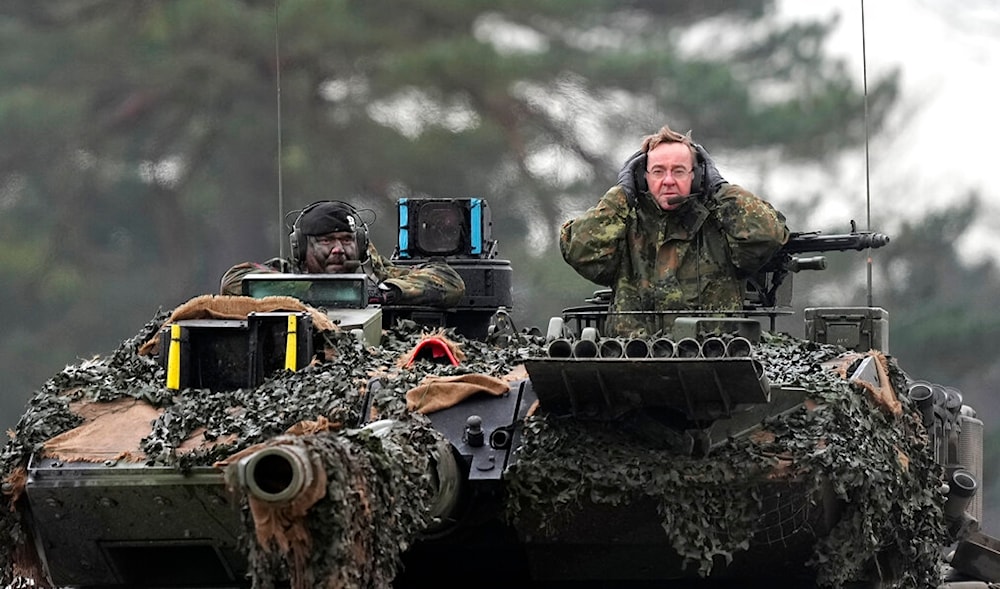
German Defense Minister Boris Pistorius, right, sits on a Leopard 2 tank at the Bundeswehr tank battalion 203 at the Field Marshal Rommel Barracks in Augustdorf, Germany, Feb. 1, 2023. (AP)
Germany’s Bundestag Budget Committee has approved a record defense procurement package worth over 50 billion euros ($58 billion), marking the largest investment in the Bundeswehr in the country’s modern history.
Defense Minister Boris Pistorius announced that the package includes nearly 30 major contracts, aimed at equipping and strengthening Germany’s armed forces over the coming years.
"We have managed to set a new record in defense spending. These are huge investments, and we all understand that, but they are investments that are genuinely necessary in the coming years," Pistorius stated after the committee session.
He emphasized that this level of spending is not “an end in itself,” but a strategic step toward restoring Germany’s deterrence and defense capabilities.
Key procurement contracts
The defense package includes:
- Over 20 billion euros allocated for combat equipment and soldier gear
- 200 Puma infantry fighting vehicles
- The Arrow-3 missile defense system
- Reconnaissance satellites
- Various other military hardware and support systems
Pistorius highlighted that Germany aims to grow the Bundeswehr’s personnel to 460,000, which necessitates major investments in equipment and infrastructure.
Largest military budget since Cold War
Earlier in December, the Bundestag also approved Germany’s defense budget for 2026, raising it to 108 billion euros, the highest level since the Cold War. Much of the budget will be directed toward military equipment and ammunition, with a significant portion funded through borrowing.
The defense buildup comes amid growing calls within the German government and NATO for Europe to assume greater responsibility for its own security amid shifting global dynamics.
German Chancellor Friedrich Merz said on Saturday that he would not rule out reinstating conscription in the coming years if the Bundeswehr continues to fall short of its recruitment targets. Speaking at a congress of the Christian Social Union (CSU), Merz also called for restoring mandatory alternative civilian service, arguing that Germany needs broader participation in national service.
Ukraine at the center of German defense
Moreover, Germany announced a comprehensive Germany-Ukraine defense plan aimed at deepening defense cooperation with Ukraine, including joint ventures, procurement initiatives, and investment guarantees.
The new agreement outlines increased cooperation in defense-related research and development, joint procurement, and possible use of federal investment guarantees to support Ukraine’s defense sector. As Ukraine’s largest European supporter, Germany will explore greater integration of Ukrainian defense manufacturing into the regional defense market.
Key to the agreement is a potential joint procurement of Ukrainian-made defense equipment, including interceptor drones, under the European Sky Shield Initiative, with an eye toward protecting NATO airspace.
The plan also includes regular high-level consultations between the two defense ministries. A liaison office, to be named the Ukraine Freedom House, will be established in Berlin to support cooperation and enhance ties between the two nations' defense industries.
In parallel, Germany will strengthen its military presence in Kiev by increasing its military attaché team and broadening expert exchanges with Ukrainian counterparts.
Read more: Germany approves new military service plan as Europe rapidly rearms


