
Germany turns to Azerbaijan for gas after Russian halt
 2 Min Read
German Chancellor Friedrich Merz says Berlin is looking to Azerbaijan as a key gas supplier as Germany continues to grapple with the loss of Russian energy imports.
-
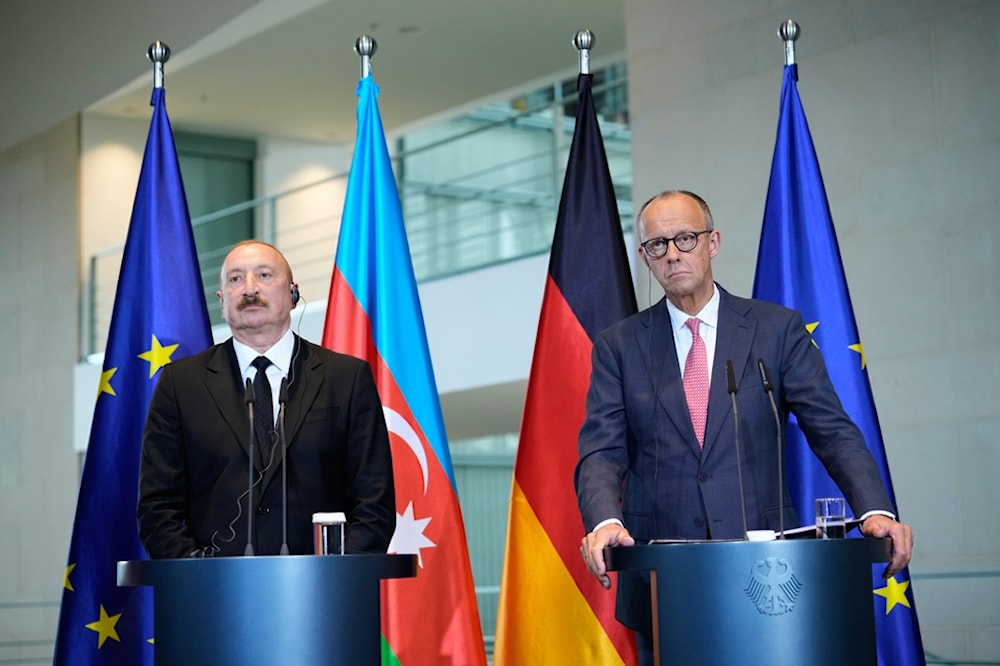
German Chancellor Friedrich Merz and Azerbaijan's President Ilham Aliyev attend a news conference after a meeting in Berlin, Germany, Tuesday, July 21, 2026. (AP Photo/Ebrahim Noroozi)
German Chancellor Friedrich Merz said Tuesday that Berlin is seeking to expand energy cooperation with Azerbaijan, describing the country as an increasingly important source of natural gas after Germany ended imports from Russia.
Speaking after talks with Azerbaijani President Ilham Aliyev, Merz said Germany continues to search for alternative energy suppliers following the suspension of Russian gas deliveries.
"After four and a half years during which gas supplies from Russia were stopped, we are naturally looking for new sources of imports. In this context, Azerbaijan plays an important role, and it is an economically interesting prospect for us," Merz said.
Read more: France and Germany plan roadmap to address China trade deficit
Berlin seeks deeper energy cooperation
Germany and Azerbaijan signed a joint declaration outlining a strategic agenda to deepen bilateral cooperation.
The agreement covers collaboration on global and regional issues, including infrastructure connectivity, energy transit, and the expansion of gas supplies.
The announcement underscores Berlin's efforts to diversify its energy sources as it seeks to reduce reliance on a single supplier while strengthening ties with energy-producing partners.
Russian gas cutoff continues to weigh on Germany
Merz acknowledged on July 19 that the loss of Russian gas has contributed to a prolonged energy crisis in Germany.
Europe's largest economy has faced persistent economic stagnation in recent years, with elevated energy costs placing sustained pressure on industrial production and broader economic activity following the end of Russian pipeline gas imports.
Before the suspension of supplies, Russian pipeline gas had long been a cornerstone of Germany's energy mix, powering much of its industrial sector and providing relatively affordable energy for Europe's largest economy. The disruption of those supplies has remained a major factor behind higher energy costs and broader economic challenges in Germany.
Read more: EU shift from Russian gas with US LNG risky: Gazprom CEO


