
Senate rejects measure to limit Trump military action against Cuba
 3 Min Read
The US Senate blocks a bid to advance legislation restricting military action against Cuba without congressional approval, another failed attempt to limit Trump’s use of overseas military force.
-
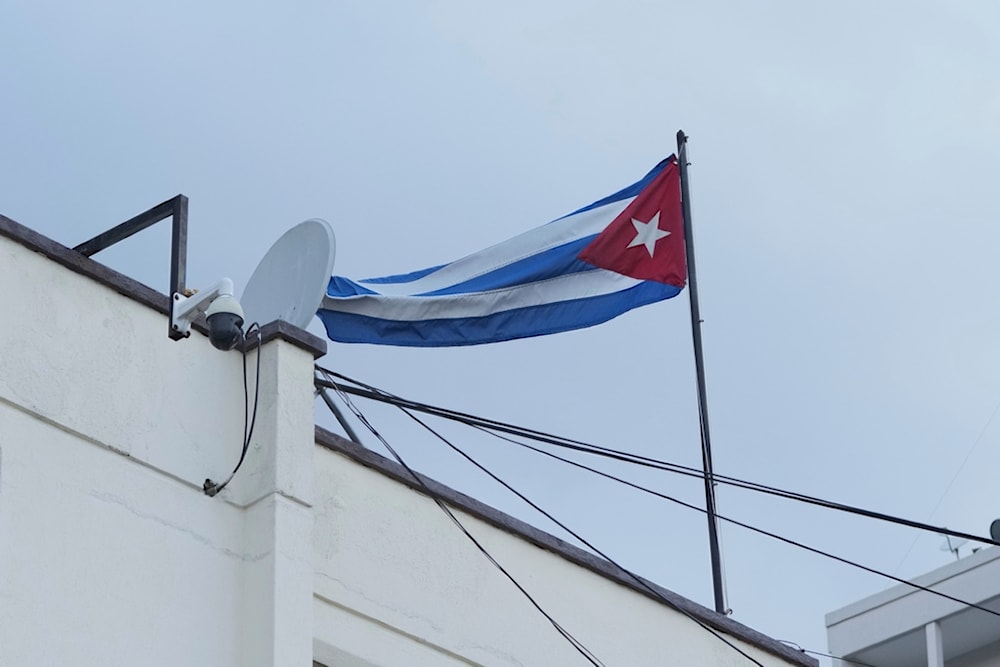
A Cuban flag flies above the Cuban Embassy in Quito, Ecuador, Wednesday, March 4, 2026. (AP Photo/Dolores Ochoa)
The Senate voted 51 to 47 on Tuesday against moving forward with a resolution that would have barred US military action against Cuba without explicit authorization from Congress. The vote underscores the support Trump continues to enjoy from Republicans who control Capitol Hill.
Republican Senators Susan Collins of Maine and Rand Paul of Kentucky voted in favor of advancing the measure. Pennsylvania's John Fetterman was the only Democrat to oppose it.
Trump escalates pressure on Cuba
Trump has intensified pressure on Cuba this year through a de facto maritime blockade while openly suggesting the possibility of military intervention.
The United States has deployed Coast Guard and naval assets to intercept or deter fuel shipments bound for Cuba, severely restricting supplies.
The president has repeatedly indicated that Washington could "take" Cuba or force a change in leadership in the island nation.
Read More: US military boosts preparations for possible military action in Cuba
A campaign to choke Cuba
Washington's drive against Cuba has been building since January, when US forces kidnapped Venezuelan President Nicolás Maduro in a military assault, after which US Secretary of State Marco Rubio warned that Cuba's government should be "concerned."
Trump moved quickly to isolate the island. On 29 January, he signed an executive order declaring a national emergency and authorising tariffs on any country supplying oil to Cuba, in what the New York Times described as the harshest blockade on the island since the Cuban Missile Crisis.
Washington has explicitly confirmed that regime change in Cuba is a goal by the end of the year.
In March, Trump told reporters he expected to have "the honor of taking Cuba." At a rally in Phoenix last week, he declared that US military strength would bring "a new dawn for Cuba," telling the Cuban-American crowd the moment had been "70 years in the making."
In turn, on April 13, he told reporters at the White House he "might stop in Cuba" once the war on Iran ends.
Reports emerged this week that Pentagon officials received a White House directive to accelerate preparations for possible military operations against Cuba, driven by Trump's frustration with President Miguel Díaz-Canel's defiance in spite of the blockade.
A population under siege
The US blockade's toll on ordinary Cubans has been severe. Cuba's national electric grid collapsed twice in March, forcing hospitals to suspend operations and schools and businesses to close.
According to the UN Human Rights Office, the fuel shortage has threatened Cuba's food supply, disrupted water systems and hospitals, and hampered UN World Food Programme relief efforts, which are still ongoing after Hurricane Melissa. Ambulances are struggling to find fuel to respond to emergencies, and flights carrying vital supplies have halted after Havana lost the ability to refuel outbound aircraft.
UN human rights experts have condemned the blockade as "a serious violation of international law" and "an extreme form of unilateral economic coercion," warning that measures likely to cause shortages of essential goods may amount to the collective punishment of civilians.
Read More: Merz: No grounds for US military intervention in Cuba


