
US lawmaker warns congressional inaction could enable attack on Cuba
 4 Min Read
A Democratic Senator says failure by Congress to curb war powers may clear the way for Trump to authorize military action on Cuba amid concerns surrounding the US war on Iran.
-
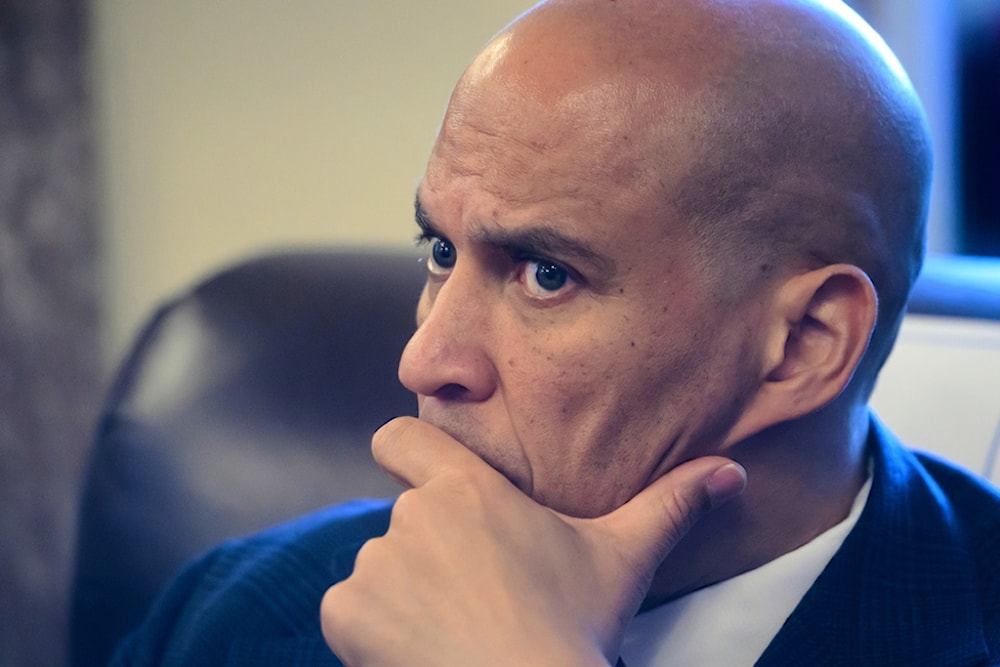
Sen. Cory Booker, D-N.J., at a press briefing on the Iran war powers resolution at the Capitol, Monday, March 9, 2026, in Washington. (AP)
Sen. Cory Booker, a Democratic lawmaker from New Jersey, criticized the US Congress for failing to act to restrict presidential war powers, warning that continued legislative inaction could embolden US President Donald Trump to launch a military operation against Cuba.
Booker made the comments during an appearance on CNN’s State of the Union, where he framed congressional silence as a dangerous signal to the executive branch.
“Why is Congress just laying down and doing nothing?” Booker asked host Jake Tapper, accusing Republicans, who have opposed war powers resolutions, of serving as Trump’s political “lapdog".
Booker’s remarks reflect broader Democratic concerns about unchecked executive authority in foreign military operations against Iran and other nations. He cautioned that stamping the president’s “permission slip” could lead to a pattern of unilateral military engagements.
Read more: US Democrats threaten Senate vote repeat to halt war on Iran
Warning of broader military escalation
“If we allow this to happen, then we give Trump the permission to say, ‘Okay, finished with Venezuela, I went to Iran, now I’m going to go Cuba, now I’m going to go to North Korea,’” Booker said in the CNN interview, linking congressional inaction on restraining war powers to a possible future escalation of US military intervention beyond the ongoing war on Iran.
Booker’s comments drew attention to concerns that, without explicit congressional checks, presidential authority over military deployments may expand. He also acknowledged that leaders from both political parties have contributed to the growth of executive war powers historically, including past presidents committing forces abroad without formal legislative authorization.
“But let’s put this into perspective,” Booker added. “Nothing Obama did, nothing Trump did even in his first term are in any way relation to what we’re seeing right now.”
The US president stated earlier in March during an interview that “Cuba’s going to fall" as Washington's economic pressure on the island increased following the imposed blockade of Venezuelan oil to Havana.
Funding disputes and government shutdown impacts
In the same interview, Booker addressed domestic budget negotiations amid the ongoing partial government shutdown. He urged that key Department of Homeland Security components, such as the Transportation Security Administration, the Cybersecurity and Infrastructure Security Agency, and the Coast Guard, receive funding.
Booker criticized Republican resistance to funding these agencies, attributing delays to Republican insistence on funding Immigration and Customs Enforcement (ICE) in the context of intensified immigration enforcement operations across several cities.
“Democrats have tried multiple times to try to get [the TSA], [Cybersecurity and Infrastructure Security Agency], the Coast Guard funded,” Booker said during the interview, describing Republicans’ demands for broader agency funding as an obstacle.
Broader congressional criticism of war powers policy
Booker’s warning fits within wider Democratic efforts to compel Congress to assert its constitutional prerogatives over war declarations and military engagement. Recent reports indicate that Booker, along with several other Senate Democrats, has pushed for immediate public hearings on the war on Iran to expose senior administration officials to public scrutiny and accountability.
These senators argue that the administration has bypassed Congress with shifting rationales for continuing the war on Iran, a practice they view as unconstitutional.
In addition to hearings, Democrats are pursuing legislative mechanisms such as war powers resolutions to require congressional authorization for sustained military engagement. These efforts have faced resistance from Republicans controlling both chambers, who claim that the president’s actions fall within constitutional authority.
Read more: Graham threatens Saudi Arabia with 'consequences' over Iran missiles
Constitutional framework: War powers and congressional authority
Under the War Powers Resolution of 1973, the US Congress has the statutory authority to limit the president’s deployment of armed forces without legislative approval. The law requires notification to Congress within 48 hours of committing forces to hostilities and restricts continued engagement beyond 60 days without formal authorization.
Critics like Booker contend that failure to enforce these limits weakens constitutional checks on executive military action, potentially enabling presidents to extend conflicts or initiate new operations absent clear legislative consent.


