
US war on Iran records lowest public support in modern history
 3 Min Read
An analysis of US polling finds the war on Iran has become the least popular major American war on record, with public opposition exceeding that seen during the Vietnam War.
-
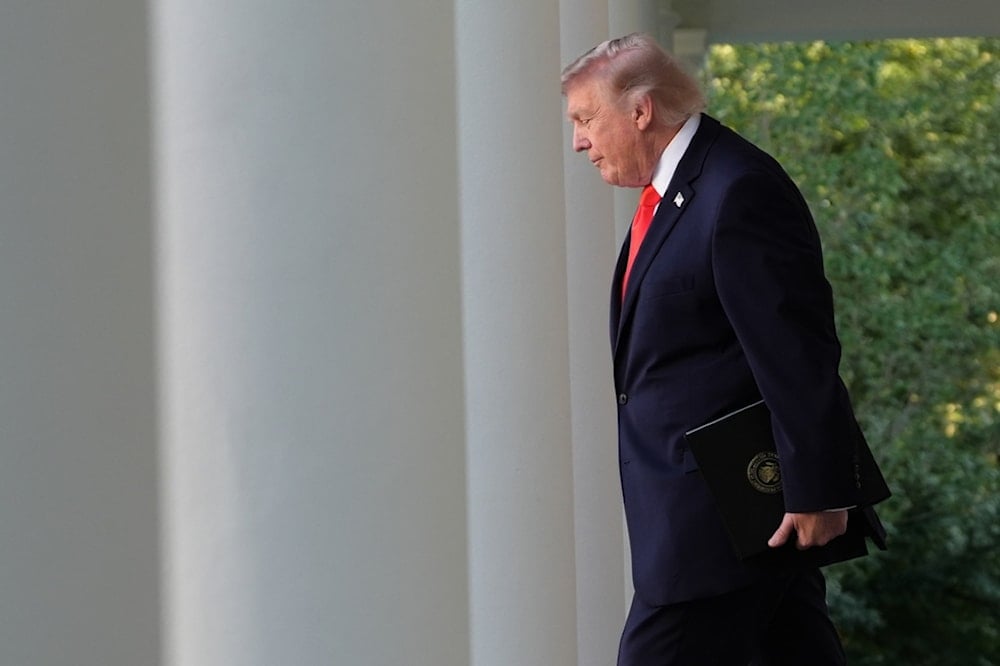
US President Donald Trump walks from the Oval Office to speak at a Rose Garden Club dinner with farmers, at the Rose Garden of the White House on June 25, 2026, in Washington. (AP Photo/Jacquelyn Martin)
The US war on Iran has become the least popular major military conflict in modern American history, according to a new analysis of public opinion surveys published by Responsible Statecraft on Friday.
The study, conducted by Stephen Semler, examined 153 public opinion surveys covering seven major US conflicts and concluded that the current war has reached historically low levels of public support.
According to the analysis, net public support for the war stood at negative 32% in June, meaning opposition exceeded support by 32 percentage points. The figure surpasses the final recorded public opinion during the Vietnam War, which registered a negative 31% net support.
Semler argues that the findings directly contradict earlier claims by senior US officials that the military campaign enjoyed broad domestic backing.
Read more: Exclusive: Trump claims Iran funds to be spent on US food false
Support never outweighed opposition
The analysis identifies three unprecedented characteristics that distinguish the Iran war from previous US conflicts.
Unlike earlier wars, the conflict reportedly began with net negative public support, making it the first major US military campaign to enter combat without majority backing from the American public. It has also become the least popular conflict measured during active hostilities, falling below Vietnam in overall public approval.
Perhaps most notably, Semler found that at no stage has support for the war exceeded opposition, making it the first major US war in which public backing remained underwater throughout its duration.
The findings are based primarily on polling conducted by The Economist/YouGov, while historical comparisons rely largely on Gallup surveys covering previous wars.
Polling reveals broad desire to end the conflict
The analysis also points to an apparent contradiction within Republican opinion.
While Republican respondents expressed majority support when asked whether they backed the war itself, a separate question found that most also favored reaching an agreement to end the conflict as quickly as possible.
According to the June Economist/YouGov survey, 67% of Republicans supported the war while only 20% opposed it. However, when asked whether Washington should negotiate a deal to end the war rapidly, 54% of Republican respondents answered in favor, compared with 65% of Americans overall.
Semler argues that the results suggest many Americans distinguish between supporting military operations once underway and supporting their continuation.
Among the overall US public, net support for prolonging the war stood at negative 52%, indicating a clear preference for ending hostilities through negotiations.
Growing domestic pressure on Washington
The findings add to mounting evidence of public fatigue with prolonged US military involvement overseas, particularly in West Asia.
The widening gap between official messaging and public opinion could increase political pressure on Washington as negotiations with Tehran continue and debate over future US military commitments intensifies.
The analysis also comes amid broader polling showing growing skepticism toward interventionist foreign policy among both Democratic and Republican voters.
Read more: Trump seeks $88 billion for Iran war costs, other spending


