
AI emerges as key issue in US midterm elections campaigns
 3 Min Read
Artificial intelligence is emerging as a major issue in the US midterm elections, with nearly 40% of campaigns addressing AI-related topics.
-
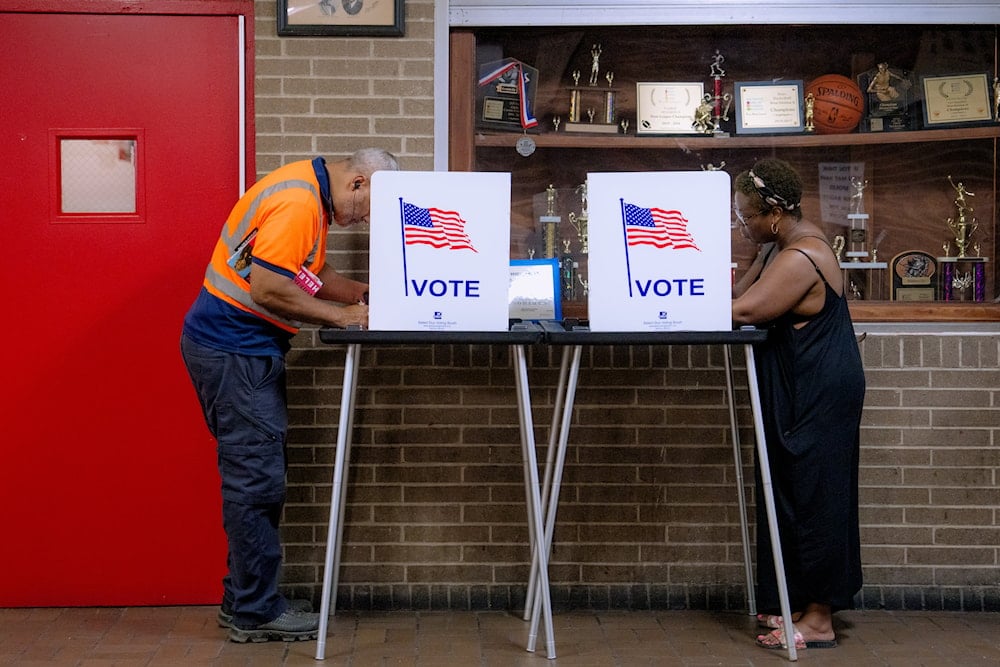
People vote in the primary election at Northwestern High School in Detroit, Tuesday, Aug. 4, 2026 (AP)
Almost 40 percent of election campaigns in the US midterm congressional elections include the topic of artificial intelligence, according to a report published Friday by The Washington Post.
Citing its own analysis covering 1,200 websites of candidates, the newspaper reported that both Democrats and Republicans tend to mention artificial intelligence-related issues on their websites more often than established topics such as "Israel", manufacturing, or racism.
The Washington Post also expects AI to become an even more pressing issue in the 2028 presidential election, with potential candidates, including Vice President JD Vance and California Governor Gavin Newsom, already discussing possible approaches to regulating the technology.
Candidates competing to ease voter concerns on AI
Artificial intelligence has rapidly emerged as a significant issue in US midterm campaigns, with candidates across the political spectrum proposing policies to address public concerns about the technology's impact on jobs, energy costs, and corporate power.
Voter anxiety is a key driver. Polls by Reuters/ Ipsos, The Economist, and the Pew Research Center, show a high proportion of Americans are "very worried" about AI's role in the economy and believe AI will displace workers.
Candidates are offering competing visions. In the Texas US Senate race, Democrat James Talarico has proposed worker protections and infrastructure funding from data centers, while Republican Ken Paxton has focused on advancing cryptocurrency innovation, stating that "America must be the crypto capital of the world".
New York Democrat Alex Bores, running for Congress, has released an AI platform requiring companies to report job losses and mandating safety testing, saying "unless we put a stake in the ground and start engaging seriously on what the policies are needed, we're never going to have the chance to catch up".
US midterms loom in the horizon
With less than three months until the November 3 midterm elections, all 435 House seats and roughly one-third of Senate seats are up for grabs, with the outcome expected to shape President Donald Trump's legislative agenda.
Republicans hold narrow majorities in both chambers, with a 219-212 edge in the House and a 53-47 advantage in the Senate. However, historical trends suggest the party in power typically faces headwinds in midterm elections. CNN Chief Data Analyst Harry Enten said the high turnout in Democratic primaries, surpassing 25 million votes, is a warning sign for the GOP. "I'm running scared," Enten said. "The numbers don't lie."
The battle for the Senate presents a challenging map for Democrats, who hold 47 seats and must net four additional seats to secure a majority. Republicans are defending 22 seats while Democrats defend 13, giving the GOP a structural advantage. Key Democratic targets include open Republican seats in North Carolina and Maine.
The House appears more favorable for Democrats, who need only a modest net gain to reclaim control with recent polling showing Democrats leading in a generic congressional ballot test, with one survey placing them at 42 percent to the Republicans' 37 percent.


