37 years after burying the founder, the Islamic Republic farewells its consolidator
-
 Samuel Geddes
- 4 Jul 2026 15:36
 7 Min Read
Samuel Geddes examines Sayyed Ali Khamenei’s leadership and the resilience and continuity of Iran’s Islamic Revolution.
-
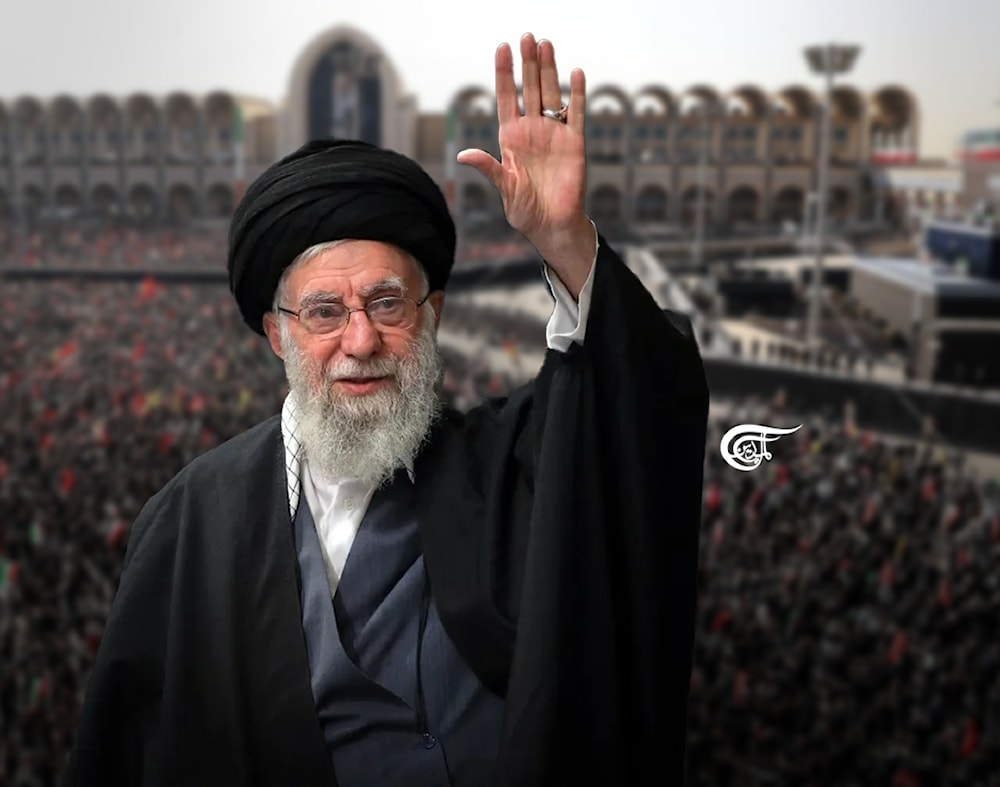
Sayyed Khamenei demonstrated a form of leadership that allowed elected presidents to pursue their desired course- within limits- but in a way that showed him to be ultimately responsive to the political and social shifts in society, not simply shaping them from above. Designed by: (Al Mayadeen English/Fatima Attieh)
Ayatollah Sayyed Ali Khamenei’s nearly four decades in office revolved around ensuring that the Islamic Revolution would long outlast him - his martyrdom has guaranteed that it will.
Only on rare occasions do we witness events that collapse the narratives so meticulously constructed to obscure reality. On June 5th, 1989, such an event unfolded before the world’s media in South Tehran, the funeral and burial of Ayatollah Khomeini, who founded and led the system produced by the Iranian Revolution in 1979.
It was easily the largest public funeral ever covered, likely the largest to ever occur, in addition to being the single largest gathering of humans in recorded history. Reportedly, ten million Iranians, by then one in six of the country’s people, attended and participated in the proceedings that committed the Imam’s mortal remains, along with the first decade of the post-revolution era, to history.
Of course, finding uncontested figures for such superlative occasions is seldom possible. Nonetheless, the sheer enormity of that event and the tide of humanity it involved shattered a myth that nonetheless persists among western leaders and opinion-shapers- that the Islamic Republic born from the Revolution was some precariously tottering edifice in need only of the slightest push to come crashing down, rather than a system arising from the mass of the society it governed.
However, many voices could be sought out to oppose the Islamic Republic - none of them could ever claim to mobilize such millions prepared to embrace privation and martyrdom in defense of its existence. Saddam Hussein learned this lesson to his cost upon invading the nascent Islamic Republic in 1980, expecting its collapse.
Now, almost exactly 37 years later, Iran is burying the Imam’s successor, its second Leader of the Revolution- Ayatollah Sayyed Ali Khamenei. The circumstances of both his martyrdom and the significance of his now unfolding funeral are arguably of far greater symbolic and political significance for the country’s future.
During the election that followed Ayatollah Khomeini’s demise, the first transfer of leadership post-revolution was guided by figures more senior than the relatively young 50-year-old Sayyed Khamenei. The late leader’s key aides, among them future president Rafsanjani, conveyed Khomeini’s suggestion of then-president Khamenei as his successor.
If the taped proceedings of the Assembly of Experts’ deliberations are any indication, it was not a prospect initially welcomed by Sayyed Khamenei himself. He strongly protested his suitability and expressed opposition to his candidacy. Despite his misgivings, the Assembly voted and conferred its mandate on the second leader of the Revolution- the moment he absorbed the burden placed on him was dramatically captured for posterity.
His tenure began in less agitated conditions than his predecessor's. The political system was a decade old and had survived most of that period in a state of total war against Iraq, which was backed by both Western and Eastern blocs in the Cold War. Sayyed Khamenei’s early leadership oversaw the post-war reconstruction of the country, while still economically isolated from the global economy.
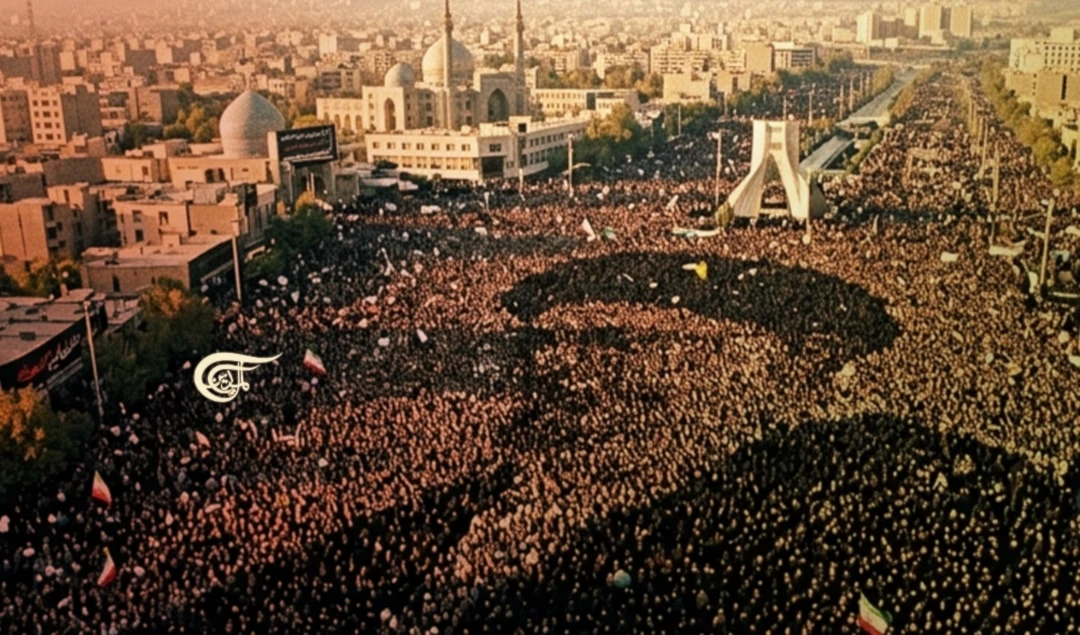
Under President Rafsanjani, Iran saw the development of an internal private capitalist sector of the economy. Conversely, Ayatollah Khamenei in parallel facilitated an equally prominent role for the Islamic Revolution Guards- the arm of the state- in spurring economic activity, reconstruction, industrial and scientific development. This crucial decision ultimately enabled Iran to withstand the decades of escalating economic (and literal) warfare as the US-led West turned to weaponizing the global economy against a polity which refused to be absorbed by it.
Despite the growth of an indigenous Iranian capitalism, and often in opposition to powerful domestic interests, Ayatollah Khamenei never permitted the Iranian economy to be opened to and absorbed and dismantled by globalized Capital- a rare feat especially in the West’s hyper-expansionist phase post-Cold War.
His insistence on the Islamic Republic’s fundamental separation from the economies of what he saw as the manifestation of ‘Global Arrogance’ and imperialism did not, however, preclude his approval of diplomatic engagement with the West in a genuine attempt to resolve core points of dispute. Repeatedly throughout his term, he permitted diplomacy with the United States under presidents Khatami, Rouhani, and Pezeshkian, though always within clear parameters that the fundamental interests and security of Iran, its advances in military technology, its support for the Axis of Resistance, and its implacable opposition to the Israeli regime, were never subject to negotiation.
Here, particularly, Sayyed Khamenei demonstrated a form of leadership that allowed elected presidents to pursue their desired course- within limits- but in a way that showed him to be ultimately responsive to the political and social shifts in society, not simply shaping them from above. In his many years of leadership, his role became that of the unmoving center of the political scene- an arbiter and referee of the competing political factions whose persistent goal was preservation of the stability of the political system.
After the fiercely contested presidential election of 2009, Ayatollah Khamenei publicly expressed his displeasure at the street violence stemming from the hostility of the opposing factions, commanding that the unrest should end for the good of the System. In a statement that came to define his leadership to the end of his life, he declared;
“I have an unworthy life, I have an incomplete body, and the little dignity which you have bestowed on me. I will place it all in my hand and sacrifice it in the path of the Revolution and Islam.”
Approaching two decades on from that statement of purpose, he made good on those words, welcoming his assassination at the hands of the US and “Israel”, accepting it as the opening strike in the war against his country and the system he devoted his life to continuing.
Now, amidst a funeral spanning Iran and Iraq, eclipsing the events of 1989 with potentially tens of millions of mourners, Trump and Netanyahu might just begin to comprehend the forces their actions have unleashed. This is not a weakening of the Iranian system, but its solidification through the regenerative process of martyrdom, performed by its highest leader.
What will follow now, and what has been left in the hands of Sayyed Mojtaba Khamenei, is the ever-deepening institutionalization of the Islamic Revolution and the elevation of Iran to the status of a major power in opposition to a floundering and rotting Western world system that it increasingly seems it will outlast.
By any metric, that would render the tenure of Ayatollah Sayyed Ali Khamenei a success on its own terms.