
Europe heads toward winter with gas reserves at 13-year low
 4 Min Read
Europe is heading into winter with gas storage at its lowest level in 13 years, raising the risk of sharp price increases as Gulf supply disruptions persist.
-
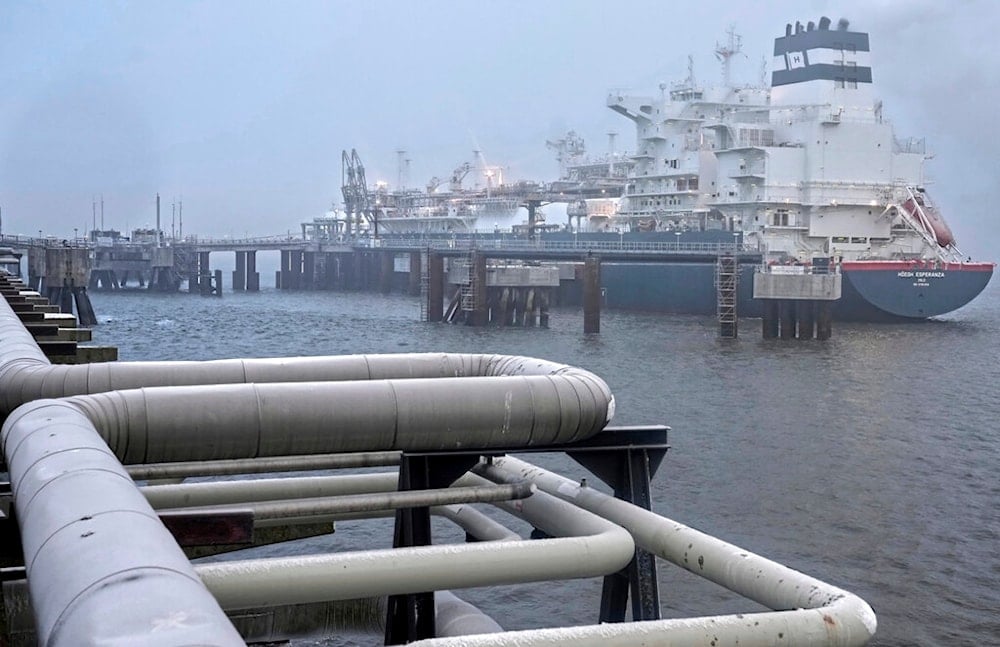
The 'Hoegh Esperanza' Floating Storage and Regasification Unit (FSRU) is anchored during the opening of the LNG (Liquefied Natural Gas) terminal in Wilhelmshaven, Germany, on December 17, 2022 (AP)
Europe is approaching the winter heating season with natural gas inventories at their weakest level in more than a decade, raising concerns that energy prices could rise sharply if cold weather or further supply disruptions tighten the market, The Guardian reported.
Gas storage facilities across the European Union were around 63% full in the final week of August, substantially below the roughly 80% level typically recorded at this stage of the year.
If injections continue at their current pace, the bloc could begin the winter season with stocks roughly 20% below the five-year average and at their lowest level since 2013, according to gas analyst and professor Greg Molnar.
“Low storage levels are naturally increasing the risk of heightened winter price volatility,” Molnar said, warning that the pressure could intensify if “cold spells or slow wind patterns” increase demand for gas-fired power and heating.
The situation has become a growing concern for energy traders as Europe remains heavily dependent on imported gas, particularly liquefied natural gas, to compensate for depleted reserves.
The United Kingdom could be among the most exposed markets because it combines high gas consumption with limited domestic storage capacity.
Britain typically relies on pipeline supplies from continental Europe alongside LNG shipments arriving from the United States and West Asia.
Chris O’Shea, chief executive of Centrica, the owner of British Gas, warned this week that the UK had "almost no gas in storage" ahead of the colder months.
Iran war disrupts Gulf energy flows
Europe’s difficulties rebuilding inventories have intensified since the US-Israeli war on Iran disrupted energy exports from the Gulf.
The bloc had aimed to rebuild storage levels to about 80% before winter, but injections have remained weak as uncertainty surrounding shipping and energy flows from the region persists.
Storage levels were already under pressure following a colder-than-usual end to the previous winter, which forced European countries to draw more heavily on reserves.
Gas consumption also increased during this summer’s heatwaves as power generators relied more heavily on gas-fired plants to meet electricity demand.
Ordinarily, European storage operators replenish facilities during the warmer months, when consumption is lower, and gas can often be purchased more cheaply.
Expectations that shipping conditions around the Strait of Hormuz might improve initially helped keep European gas markets relatively stable during the summer.
That optimism has since faded.
Bjarne Schieldrop, chief commodities analyst at Nordic banking group SEB, said markets had remained relatively calm partly because traders expected the Strait of Hormuz to reopen and allow European inventories to recover. However, “no one expects it to happen any time soon”, he said.
“As a result, the European natural gas market has run into a bit of a winter panic over the past week,” Schieldrop added.
Gas prices climb to three-year highs
Despite growing concerns over storage, analysts are not currently forecasting outright physical gas shortages across Europe. Instead, the greater risk is a sharp increase in prices as European buyers compete with Asian markets for available LNG cargoes during the winter.
Europe’s benchmark gas price has recently climbed above €68 per megawatt-hour, its highest level in about three years and more than twice the level recorded at the beginning of 2026.
Demand for imported LNG is expected to increase further as temperatures fall, potentially forcing European utilities and traders to offer higher prices to divert cargoes from Asian buyers.
Analysts at Goldman Sachs estimate that, without a recovery in Middle Eastern gas exports, Europe’s benchmark gas price “would likely need to move above €100/MWh” to attract sufficient LNG shipments to cover winter demand.
Read more: European gas prices surge as US war on Iran threatens winter supply


