
US trade court blocks Trump's global 10% tariff
 3 Min Read
A US trade court ruled against Donald Trump’s 10% global tariff, dealing another setback to the administration's globally unpopular trade agenda.
-
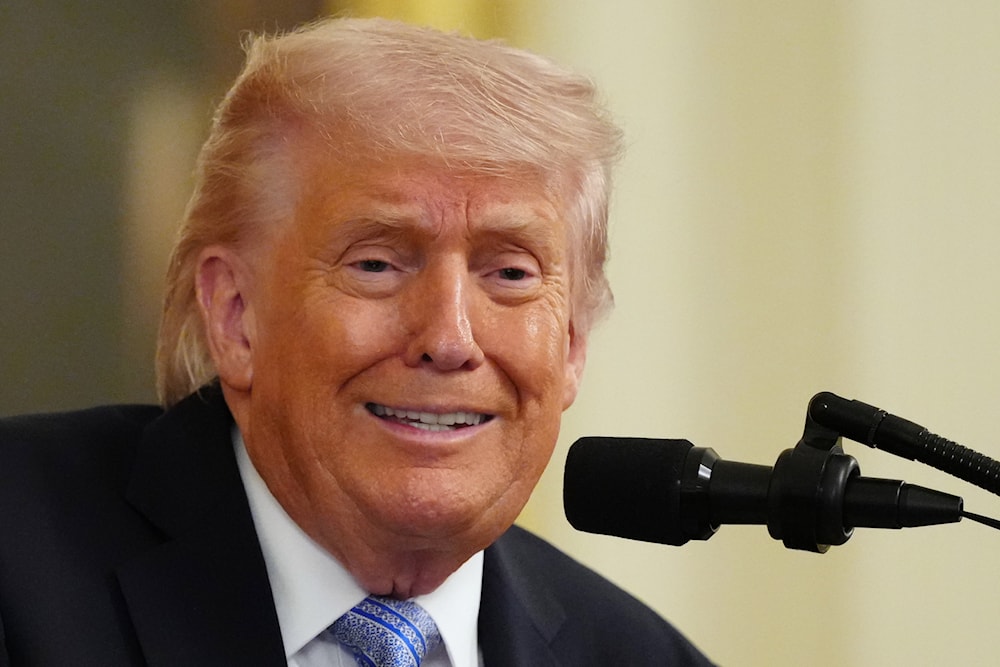
United States President Donald Trump speaks during an event with small business owners, on May 4, 2026, in the East Room at the White House in Washington. (AP)
A United States federal trade court ruled Thursday against President Donald Trump's 10% global tariff, marking another legal setback for the administration's trade policy after earlier duties were struck down by the Supreme Court.
The 2-1 decision by the US Court of International Trade temporarily blocks the tariffs from being applied to two companies and the state of Washington, although the ruling could pave the way for broader legal challenges.
The court found that the tariff, imposed under Section 122 of the Trade Act of 1974, was not justified under the law cited by the administration.
One of many setbacks
Trump introduced the temporary 10% duty in February after the Supreme Court invalidated many of his earlier global tariffs that had been enacted under the International Emergency Economic Powers Act.
The administration argued the measure was necessary to address balance-of-payments deficits. The tariff is scheduled to remain in place until late July unless Congress approves an extension.
In its ruling, the trade court ordered the defendants to comply within five days and directed that the importers involved in the lawsuit receive refunds.
The Trump administration is expected to appeal the decision.
Jeffrey Schwab, senior counsel at the Liberty Justice Center, welcomed the ruling, arguing that Section 122 was intended for a different economic context.
“Section 122 was passed in response to a specific historical crisis that resulted in the United States's currency and gold reserves being depleted,” Schwab said in a statement.
“The United States has a trade deficit, not a balance-of-payments deficit, and does not have international payments problem,” he added.
Businesses seek refunds after latest tariff setback
The decision does not affect Trump's sector-specific tariffs on steel, aluminum, and automobiles, which remain in place.
However, the ruling adds to mounting complications facing Trump's tariff strategy. Since the Supreme Court struck down many earlier duties, businesses have increasingly sought refunds on collected tariffs.
According to US Customs and Border Protection estimates released in March, more than 330,000 importers could qualify for refunds following the Supreme Court decision.
The previously invalidated tariffs, imposed under emergency powers legislation, had generated roughly $166 billion in duties and estimated deposits.
Read more: EU seeks US trade talks, warns over Trump's tariffs threats on autos


