
China restricts dual-use exports over Japan's remilitarization push
 6 Min Read
China frames the move as a lawful response to Tokyo’s military buildup, Taiwan posture, and growing alignment with the United States.
-
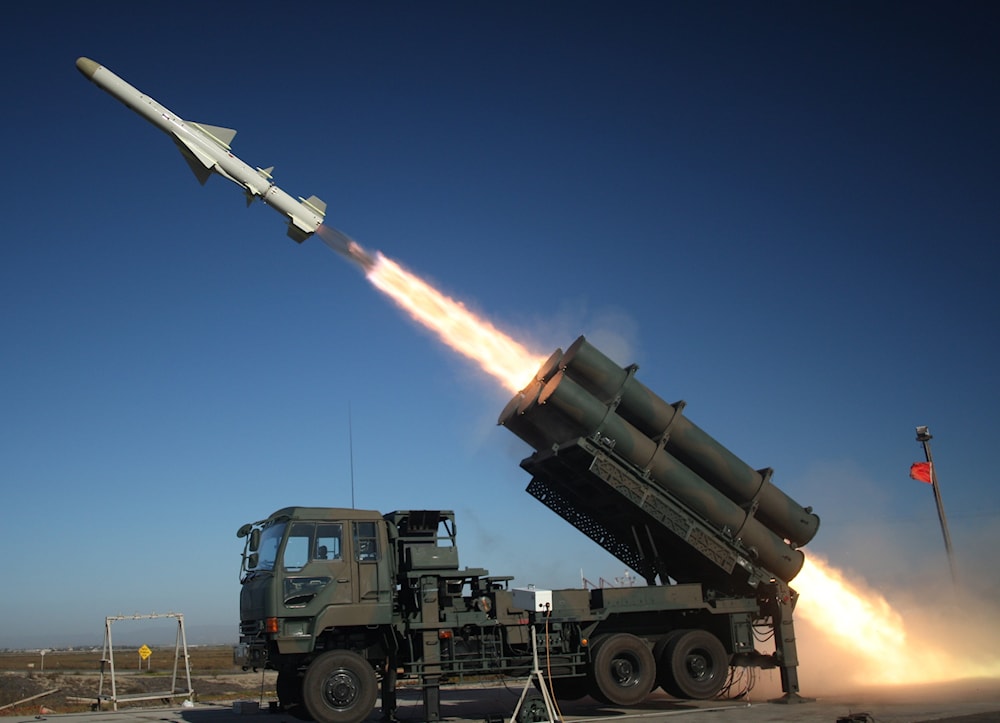
Type 88 surface-to-ship missile system during live-fire drills (Wikimedia Commons)
China moved on Monday to expand export restrictions on Japanese defense-linked institutions and companies, the Japan Times reported, in a move aimed at preventing Chinese-origin technologies from feeding Japan's accelerating military buildup.
The decision comes as Beijing grows increasingly alarmed by Tokyo's departure from postwar restraint, including its deployment of longer-range weapons, expanding military coordination with the United States and the Philippines, and repeated signals that Japan could involve itself militarily in a Taiwan emergency.
For China, such moves carry deep historical weight. Japan's imperial aggression in China, including the atrocities committed by Japanese forces during the Nanjing Massacre, remains central to Beijing's understanding of Japanese militarism and its dangers. Against that background, China has framed its latest export controls not as an escalation, but as a necessary security measure to prevent sensitive materials from strengthening a military apparatus it sees as moving in an increasingly offensive direction.
Beijing acts against dual-use risks
China placed 20 Japanese entities on its export control list, including Japan's National Institute for Defense Studies, the Ground Systems Research Center, Naval Systems Research Center, Air Systems Research Center, and several Mitsubishi-affiliated defense contractors.
Under the designation, Chinese exporters are prohibited from supplying the listed entities with dual-use goods. Companies and individuals outside China are also barred from transferring Chinese-origin dual-use items to them, while any ongoing transactions must be stopped immediately.
Dual-use goods include materials, technologies, and products that can serve civilian purposes but also support military production. These include rare-earth materials used in high-performance magnets, electric vehicles, electronics, and defense systems.
China's Commerce Ministry defended the decision as a lawful and justified measure to safeguard national security and prevent Chinese-origin materials from contributing to Japan's military capabilities.
A ministry spokesperson said the measures were “completely justified, reasonable and lawful,” stressing that the controls are directed at entities tied to Japan's remilitarization and alleged pursuit of nuclear weapons.
“Japanese entities that act in good faith and comply with the law have absolutely no cause for concern,” the spokesperson added.
Japan's military shift raises alarm
China's concerns have intensified since Prime Minister Sanae Takaichi told parliament last November that Tokyo could hypothetically intervene militarily in an emergency over Taiwan.
Beijing has repeatedly warned Japan against interfering in the Taiwan question, which China regards as an internal matter and a red line for its sovereignty and territorial integrity. From China's standpoint, any Japanese suggestion of military involvement across the Taiwan Strait is especially dangerous given Japan's imperial record in Asia and the postwar restrictions meant to prevent the revival of Japanese militarism.
China has also criticized Japan's broader defense expansion, describing it as “remilitarization” and a form of “new militarism". Beijing argues that Tokyo is no longer merely maintaining a defensive posture, but is moving toward capabilities that could enable operations beyond its borders.
According to the official Xinhua News Agency, China's Commerce Ministry spokesperson said, “Japan has not changed its course but has instead gone further down the wrong path by … deploying offensive weapons and launching offensive missiles beyond its borders.”
Japan recently deployed domestically developed longer-range missiles and new hyper-velocity gliding projectiles to military bases for the first time. It also crossed another postwar military threshold by firing surface-to-ship missiles from the Philippines during joint drills involving the United States.
China tightens scrutiny on additional entities
In addition to the export control list, China placed another 20 Japanese entities on a watch list requiring stricter end-user and final-use verification. The list includes Mitsui E&S, Mitsui Bussan Aerospace, and Terra Drone.
Exporters seeking to supply these entities must submit risk assessments and written guarantees that the goods will not be used to strengthen Japan's military capabilities.
The move follows a similar Chinese decision in February, when Beijing placed another 20 Japanese institutions and companies, including Mitsubishi Shipbuilding, under export controls. Those earlier restrictions tightened access to Chinese-origin dual-use items, including rare earths and critical minerals, such as dysprosium, yttrium, and samarium.
Nuclear concerns add to tensions
Beijing has also accused Japanese officials of opening the door to nuclear-related policy shifts, including discussions around nuclear-powered submarines and possible revisions to Japan's three non-nuclear principles, even as Tokyo officially maintains that it does not seek nuclear weapons.
For China, those debates reinforce the concern that Japan is testing the limits of its postwar order while deepening military alignment with Washington.
Japan rejects China's move
Japan rejected China's decision and said it had formally protested the measures.
“Regarding the measures announced today, we cannot accept them under any circumstances and find them extremely regrettable,” Chief Cabinet Secretary Minoru Kihara said at a regular news conference Monday.
“The Japanese government has lodged a strong protest and demanded the withdrawal of these measures,” Kihara added, saying Tokyo would examine the restrictions and their impact before deciding on its response.
However, Beijing maintains that the restrictions are targeted, lawful, and necessary, insisting that entities engaged in normal lawful trade have no reason for concern.
Speaking to the Japan Times, Maki Nakagawa, a think tank researcher and former commander of the Ground Self-Defense Force's Basic Intelligence Unit, said China's pressure on Japan is likely to continue.
“Beijing has been increasing political, economic and military pressure in a coordinated, whole-of-state manner, while showing strong frustration that the Takaichi administration has shown no sign of yielding,” Nakagawa said.
“Through tighter export controls and the detention of Japanese nationals, China is gradually increasing pressure and waiting for Japan to bend,” she added, referring to the recent detention of two Japanese nationals on suspicion of smuggling goods subject to export restrictions.
“That pressure is likely to intensify further.”


