
GOP senators fear Trump could hurt 2026 election chances: The Hill
 6 Min Read
GOP senators express concern that Trump's approval ratings, political fights, and policies may become a liability in key 2026 races.
-
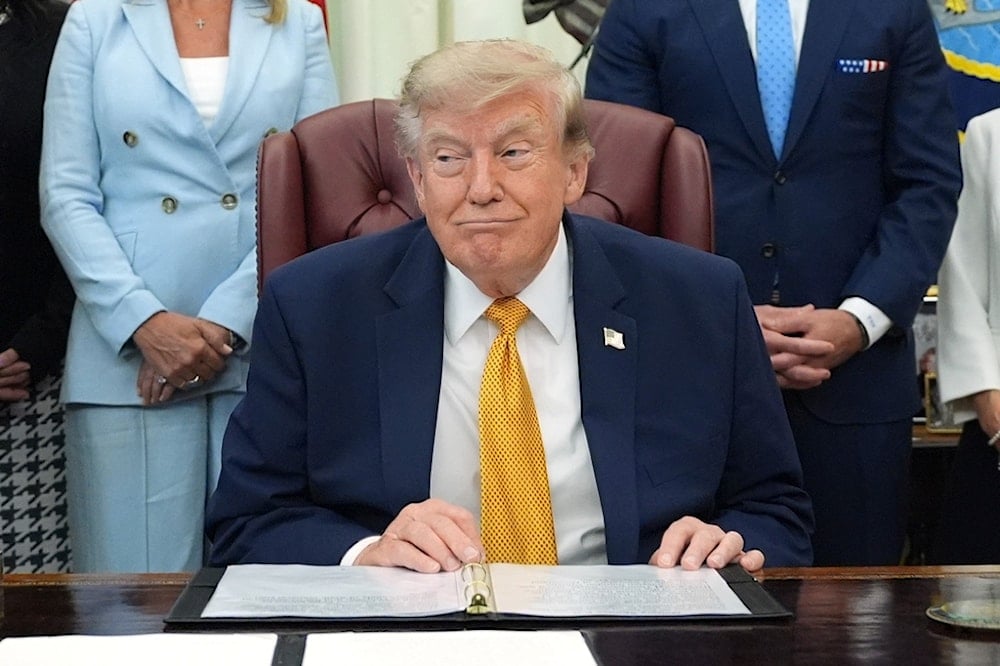
US President Donald Trump listens during a meeting about military families, in the Oval Office of the White House, Monday, Aug. 3, 2026, in Washington (AP)
Senate Republicans are increasingly concerned that US President Donald Trump could become a political liability as they attempt to defend their Senate majority in the 2026 midterm elections, according to an analysis by The Hill.
The piece said that Republican senators are frustrated with Trump's repeated criticism of the Senate's ability to govern, his push for legislation they consider unlikely to pass, and his continued support for a proposed $1.8 billion "anti-weaponization" fund for his political allies.
Several GOP lawmakers reportedly fear that Trump's positions could provide Democrats with ammunition in competitive Senate races and weaken Republican candidates ahead of the November election.
Republicans fear Trump policies could hurt Senate races
According to The Hill, Republican senators believe Trump's demands that Congress pass the Safeguard American Voter Eligibility (SAVE) Act before the election could risk discouraging the party's voter base because the legislation has little chance of becoming law.
The SAVE Act, which would require proof of citizenship for voter registration in federal elections, has become a major focus of Trump's criticism of the Senate.
One Republican senator, speaking anonymously about internal discussions among GOP lawmakers, said there is a growing perception within the Senate Republican conference that Trump's declining approval ratings could damage candidates in key races.
"That's the perception in the room," the senator told The Hill, adding that even Republicans in traditionally safe states could face closer contests.
The report noted that Republican candidates are trailing Democrats in recent polling in states including North Carolina, Ohio, Iowa, and Texas, increasing concerns among GOP lawmakers about the impact of Trump's popularity on the midterms.
Read more: Trump faces growing Senate GOP resistance over SAVE Act push
'Anti-weaponization' fund creates tensions within GOP
A major source of concern among Senate Republicans is Trump's proposed $1.8 billion compensation fund for MAGA supporters who were investigated or prosecuted during the Biden administration.
Sen. Thom Tillis (R-N.C.) described the fund as a political burden for Republican candidates preparing for reelection.
"This is horrible policy and horrible politics," Tillis said, as per The Hill.
"I want this yoke off of the members who are up for election in November because there's no way to explain it, no way to explain it whatsoever."
Tillis warned that Democrats could use the proposal to accuse Republicans of corruption during the election campaign.
The controversy escalated after acting Attorney General Todd Blanche and the Justice Department issued a statement rescinding the order that established the fund. The move came after Tillis and Sen. John Cornyn (R-Texas) threatened to block Blanche's nomination for a permanent position as attorney general.
However, Republican lawmakers said concerns over the issue had already damaged the party politically.
GOP senators push back against Trump's criticism of Senate
Republican lawmakers have also criticized Trump's repeated attacks on the Senate's leadership and his frustration with Senate Majority Leader John Thune (R-S.D.).
Trump has criticized the Senate for failing to pass the SAVE Act and other priorities, saying at a recent rally in Georgia that the chamber was "a place you send things when you want them to die."
Sen. John Kennedy (R-La.) said such comments were unhelpful while Republicans control Congress.
"I've been out there a good bit in the various battleground states, and I think ... most Americans think that Washington, including but not limited to Congress, is dysfunctional anyway," Kennedy said. "But I don't think it helps. It doesn't help."
Sen. Lisa Murkowski (R-Alaska) also criticized Trump's public attacks on Thune's leadership, saying they make it harder for Republicans to maintain unity.
"It's so unfortunate because it doesn't help John," Murkowski said. "He has a hard enough job herding the cats that he has. When you have a president that is publicly challenging his leadership, that makes his job harder."
White House rejects Republican criticism
The White House pushed back against concerns from Republican senators, defending Trump's leadership and record.
White House spokesperson Olivia Wales said Trump remains "the unequivocal leader of the Republican Party" and argued that his policies have strengthened the country.
"President Trump will continue to draw a sharp contrast with his commonsense agenda and the radical Democrats in Congress who allowed millions of illegal aliens to flow through the border, unanimously opposed the Working Families Tax Cuts, and are soft-on-crime," Wales said.
The White House also highlighted Trump's immigration policies, tax cuts, and crime reduction efforts as key achievements.
Senate Republicans seek focus on election strategy
Beyond the "anti-weaponization" fund and the SAVE Act, Republican lawmakers have also opposed Trump's push for taxpayer funding for a new 90,000-square-foot White House ballroom.
GOP senators removed $1 billion allocated for the project from a $70 billion budget reconciliation package passed by the Senate in June.
Some Republican lawmakers argue that the party should focus on legislative achievements and issues affecting voters rather than internal disputes.
Sen. Bill Cassidy (R-La.) defended Thune and said Trump could play a more constructive role by helping Senate Republicans secure votes instead of blaming lawmakers.
"Everybody has to be in it together; you can't just point fingers," Cassidy said.
"We got things that we need to pass, like a farm bill. It would be really great if we focused on passing the farm bill. Good policy is good politics."
As the 2026 midterm elections approach, Senate Republicans are increasingly focused on balancing their alliance with Trump while limiting potential political damage from divisions within the party.
Read more: GOP lawmakers fear renewed war on Iran could cost them midterms


