
Iran rejects GCC alignment with US, calls out double-standards
 5 Min Read
Iran’s Foreign Ministry spokesperson Esmail Baghaei criticizes GCC states over ties with the US and the Israeli regime, warning of security risks, arms buildup, and regional silence.
-
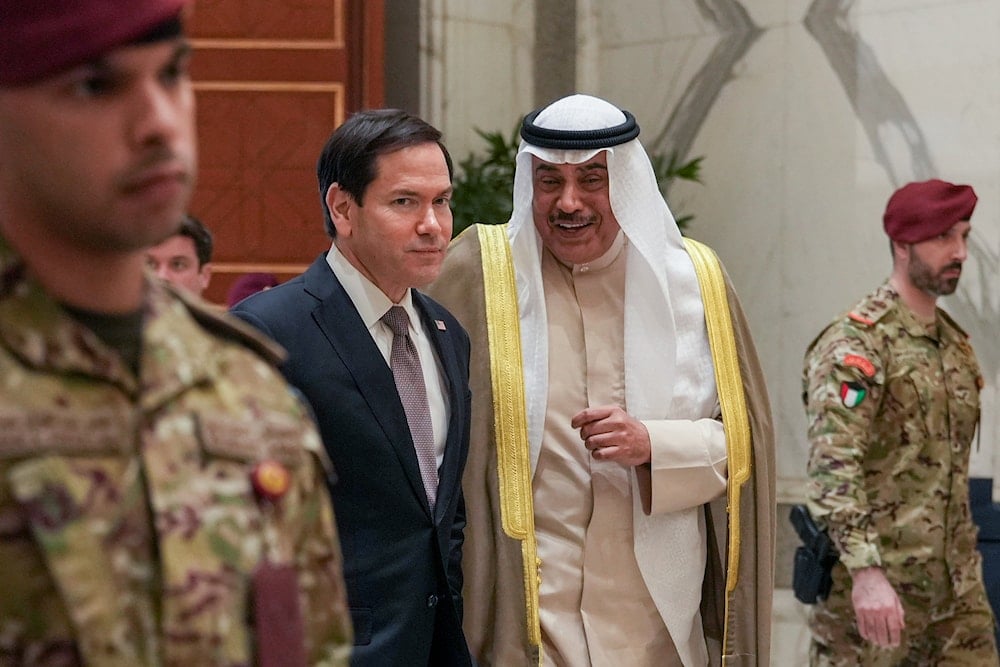
US Secretary of State Marco Rubio, left, and Kuwait's Crown Prince Sheikh Sabah Khaled Al-Hamad Al-Sabah share a word on the occasion of their meeting at Bayan Palace, in Kuwait City, Kuwait, June 24, 2026. (AP)
The Gulf must be asked why they allowed their territory to be used against Iran and participated in the US-Israeli war on Iran, Iranian Foreign Ministry Spokesperson Esmail Baghaei said Thursday, asserting that Gulf states are failing to learn from "recent bitter experiences".
"For the Gulf Cooperation Council to imagine that the solution to addressing this concern lies in seeking refuge with the greatest violator of security is, in itself, a violation of the very purpose—a bitter irony and a disheartening sign of failing to learn from recent bitter experiences," Baghaei wrote in a post on X.
بدون تردید ایران بیشتر از هر طرف دیگری، دغدغه امنیت جمعی منطقه را دارد. اینکه شورای همکاری خلیج فارس، تصور کند راه حل رفع این دغدغه، پناه بردن به بزرگترین ناقض امنیت است، خود نقض غرض است و طنزی تلخ و نشانهای مأیوسکننده از عدم درسآموزی از تجربههای تلخ اخیر.
— Esmaeil Baqaei (@IRIMFA_SPOX) June 26, 2026
باید از همسایگان…
The spokesperson questioned why GCC countries "turn a blind eye to the destructive arms race and the purchase and stockpiling of hundreds of billions of dollars in advanced weaponry that has no defensive justification."
He also pressed them on their silence over "repeated aggressions of the Zionist regime against the countries of the region and the occupation of Palestinian and Lebanese territories," and demanded to know why they remained mute on the Israeli nuclear arsenal, which he said exists "outside any international oversight."
Iran's military power is non-negotiable: Baghaei
Baghaei contrasted that silence with the labeling of Iran's "conventional defensive capabilities" as a threat, despite Iran having "repeatedly been the target of threats and attacks, even from the territory of neighboring countries."
Striking a defiant tone, Baghaei insisted that Iran's military power is non-negotiable, asserting that the country's capabilities serve as "the guarantor of the inherent right of the Iranian nation to legitimate self-defense against aggression and crime, while simultaneously ensuring peace and stability in the region."
"The national security and dignity of the country cannot be bargained or made conditional," he affirmed, asserting that "Just as the inherent right to legitimate self-defense can never be a subject for negotiation, its instruments cannot be a subject for compromise with any party."
Iranian officials warn GCC over US security ties and regional alignment
In a related development, two senior Iranian figures have issued strongly worded statements warning Gulf Cooperation Council (GCC) states against security cooperation with the United States, describing such arrangements as destabilizing and urging regional governments to distance themselves from Washington.
In a post shared on social media, the head of the National Security and Foreign Policy Committee in Iran's parliament, Ebrahim Azizi, warned Gulf leaders against “outsourcing” security to the United States, arguing it has made regional states less secure.
Warning for GCC leaders: outsourcing your security has made you less secure.
— ابراهیم عزیزی (@Ebrahimazizi33) June 26, 2026
You have seen how US military bases in your countries have turned into a source of threat instead of providing security.
Our missile and drone power, as well as the management of the Strait of Hormuz,…
He wrote that US military bases in Gulf countries “have turned into a source of threat instead of providing security.” He also stated that Iran’s “missile and drone power, as well as the management of the Strait of Hormuz, are Iran’s serious red lines.”
Azizi further said that “the only reliable path to regional security is to distance yourselves from the US”
Iran's neighbors still have "their compass reversed": Mokhber
In a separate statement, Mohammad Mokhber, the advisor and aide to the Leader of the Revolution and the Islamic Republic of Iran, criticised the statement issued by the Gulf Cooperation Council, describing it as “yet another mistake and an alignment with someone who has sacrificed regional security through their own acts of aggression.”
بیانیه شورای همکاری، اشتباهی دوباره و همسویی با کسی است که امنیت منطقه را قربانی تجاوزگری های خود کرده. قطبنمای برخی همسایگان هنوز دوست و دشمن را وارونه نشان میدهد.
— محمد مخبر (@MokhberOfficial) June 26, 2026
توافق چه با آمریکا و چه اقمار جنوب خلیج فارس، یک زنجیره است؛ یک حلقهاش که بشکند، کلِ زنجیره اش در آتش ذوب میشود.
He added that some of Iran's neighbors still have "their compass reversed," mistaking friends for enemies and enemies for friends.
"Any agreement with the United States or its allies in the southern Gulf is like a chain; if one link breaks, the entire chain falls apart," he stressed.
US, GCC target Iran's military power in statement
These remarks closely follow a joint statement issued on June 25 by the US and the six GCC states after a ministerial meeting in Manama, chaired by US Secretary of State Marco Rubio and Bahraini Foreign Minister Abdullatif bin Rashid Al Zayani.
The statement welcomed the June 17 memorandum of understanding between Washington and Tehran, credited Pakistani and Qatari mediation, and called for sustaining diplomatic momentum toward "a more permanent end to hostilities".
It also said lasting peace requires addressing Iran's ballistic missile and drone programs, along with Tehran's support for resistance movements across the region.
On the issue of the Strait of Hormuz, the statement reaffirmed the unconditional and unrestricted "freedom of navigation", rejecting any fees, tolls, or attempts to assert control over the waterway, and stressed that preserving this principle is vital to both regional and global security.
It also welcomed an Oman-IMO plan to evacuate more than 11,000 seafarers stranded in the region.
The statement was issued at the close of Rubio's Gulf tour, which also included stops in the UAE and Kuwait, and addressed a wider range of regional files, including Lebanon, Gaza, Syria, and Iraq.


