
UK may deploy warships to Hormuz after Iran ceasefire
 3 Min Read
UK considers sending warships to the Strait of Hormuz under a ceasefire with Iran, amid global talks on securing key energy shipping routes.
-
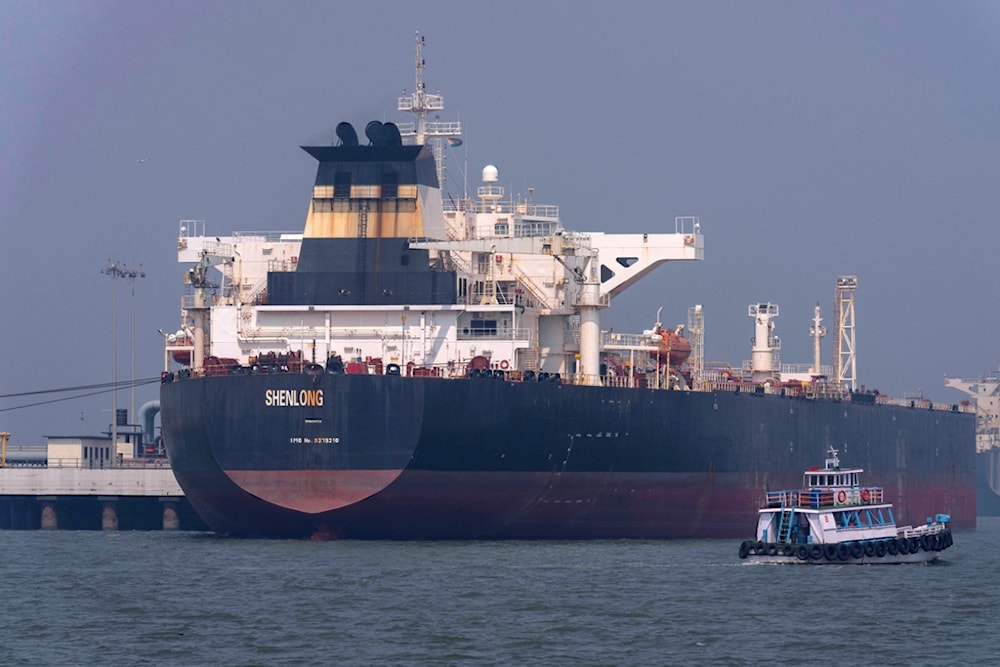
Liberia-flagged tanker Shenlong Suezmax, carrying crude oil from Saudi Arabia, that arrived clearing the Strait of Hormuz, is seen at the Mumbai Port in Mumbai, India, Thursday, March 12, 2026 (AP)
The United Kingdom may send warships "to ensure navigation" in the Strait of Hormuz, but only in the event of a ceasefire with Iran, according to a report by The Telegraph.
The report said the UK is negotiating a possible deployment as part of an “escort system” for civilian vessels moving through the strait.
The proposal was previously put forward by Emmanuel Macron, who had earlier declined French participation in operations to unblock the Strait of Hormuz.
According to the report, US allies in Europe, Asia, and the Gulf are also taking part in discussions over a potential mission.
On March 14, Donald Trump called on China, France, Japan, South Korea, the UK, and other countries to send ships to the Strait of Hormuz.
Global impact on energy security
The US-Israeli war on Iran has effectively blocked the Strait of Hormuz, a key route for oil and liquefied natural gas shipments from the Gulf to global markets. The tensions have significantly affected oil exports and production in the region.
The uncertainty over international participation in the coalition, combined with the ongoing insecurity due to the war, has raised concerns about the security of energy supplies through the Strait of Hormuz.
Global oil prices climbed more than 2% in early trading on Tuesday as markets reacted to growing concerns over supply disruptions linked to the US–Israeli war on Iran and the near shutdown of the Strait of Hormuz, one of the world’s most critical energy chokepoints.
Brent crude rose $2.48, or 2.5%, to $102.69 per barrel, while West Texas Intermediate (WTI) increased $2.42, or 2.6%, to $95.92.
The rebound followed losses in the previous session, when Brent fell 2.8%, and WTI dropped 5.3% after a limited number of vessels managed to pass through the strategic waterway.
US allies reject calls for naval escort mission
The disruption has been compounded by the reluctance of several US allies to respond to calls by US President Donald Trump to deploy naval vessels to escort commercial tankers through the strait.
On his Truth Social platform, Trump urged the UK, China, France, Japan, South Korea, and other nations to deploy ships to the strait, claiming, “Many countries, especially those who are affected by Iran’s attempted closure of the Hormuz strait, will be sending war ships, in conjunction with the United States of America, to keep the strait open and safe.”
The refusal drew criticism from Trump, who accused Western partners of failing to support Washington despite decades of US backing.
For now, the head of the International Energy Agency suggested member states could release additional oil supplies beyond the 400 million barrels already approved from strategic reserves to help stabilize markets.


