
US-Israeli war on Iran derails US-Saudi relations: WSJ
 8 Min Read
US-Saudi relations face a deep crisis amid tensions over the Iran war, Strait of Hormuz operations, and growing disputes over US military presence.
-
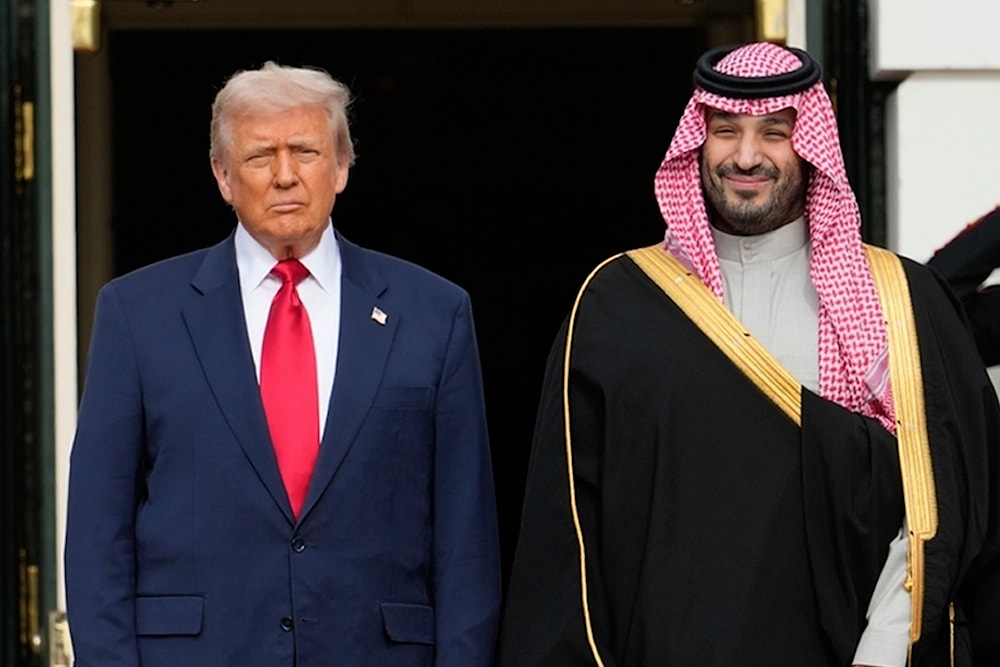
President Donald Trump stands with Saudi Arabia's Crown Prince Mohammed bin Salman on his visit to the White House, Nov. 18, 2025, in Washington (AP)
US-Saudi relations, the bedrock of Gulf security for decades, have plunged into their deepest crisis in years amid a growing rift over the US-Israeli war on Iran, the Wall Street Journal (WSJ) reported on Tuesday.
The tensions, which have included White House threats to withhold critical military aid, a failed US military operation aborted after Saudi Arabia denied access to its bases and airspace, and a pointed diplomatic snub that Riyadh interpreted as a calculated slight, have prompted Washington to consider reducing its military footprint inside the kingdom, officials said.
More than 100 US military aircraft were scrambled from bases and warships across West Asia this past spring as part of a high-stakes operation to force open the Strait of Hormuz, only to encounter an unexpected obstacle: Saudi Arabia refused to grant access to its bases and airspace, which were critical to the mission, according to US officials familiar with the matter.
The Saudi pushback forced the Pentagon to abort "Project Freedom", halting the military operation that US President Donald Trump had launched just hours earlier to guarantee safe passage for commercial shipping through the strategic waterway, officials said.
The White House was incensed. According to the WSJ report, US and Arab officials with knowledge of the discussions said the administration threatened to withhold delivery of interceptor missiles that Saudi Arabia relies on to use against Iranian drones and missiles unless the kingdom reversed its decision. Riyadh ultimately backed down, but US officials acknowledged at the time that the damage to trust would not be easily repaired.
Now, according to US officials involved in the planning process, Washington is actively considering reducing its military footprint inside the kingdom, a move that would signal a significant recalibration of the decades-old security partnership.
Diplomatic snub or calculated message?
WSJ noted that tensions played out publicly last week when US Secretary of State Marco Rubio toured the Gulf, visiting the United Arab Emirates, Kuwait, and Bahrain, three nations hit hardest by Iranian retaliation during the war, but conspicuously skipped Saudi Arabia. Saudi officials interpreted the decision as a deliberate snub, according to people familiar with the kingdom's thinking.
Trump administration officials denied any slight, stating that Rubio held positive talks with Saudi Foreign Minister Faisal bin Farhan on the sidelines of a Gulf Cooperation Council (GCC) meeting in Bahrain. The US and all GCC members issued a joint statement afterward reaffirming their "strong commitment" to the partnership.
Days earlier, Saudi Crown Prince Mohammed bin Salman declined an invitation to the Group of Seven summit in France, a move that people close to the royal court said was meant to protest Washington's handling of the US-Israeli war on Iran. The leaders of the UAE, Qatar, and Egypt attended the gathering. At the time, Saudi media reported that the crown prince cited prior commitments in a letter to French hosts.
A relationship under strain
It remains unclear how deeply the disagreements will affect a partnership that has long been a cornerstone of US Middle East policy. Close US-Saudi ties have helped ensure the free flow of dollar-priced oil and balance the heavy US commitment to "Israel".
The kingdom is a major buyer of American arms and a vital source of investment capital, including for critical minerals, artificial intelligence, and civilian nuclear cooperation.
Crown Prince Mohammed bin Salman had bet heavily on his personal relationship with President Trump during the latter's second term. That strategy appeared to pay off last fall with a White House visit during which Trump praised the de facto Saudi ruler and dismissed concerns over the 2018 killing of columnist Jamal Khashoggi, an issue that had previously alienated the crown prince from Washington and Congress.
Behind the scenes of Trump's 'Epic Fury'
Saudi Arabia and the United States were never fully aligned over the war on Iran. Gulf powers, including the kingdom, lobbied the White House for weeks early this year to pursue a diplomatic resolution after the US built up forces in the region and warned allies to brace for a major war, according to Arab officials, cited by WSJ.
Saudi officials cautioned the White House that any attempt to topple the Iranian regime would close the Strait of Hormuz, rattle global oil markets, harm the US economy, and destabilize the region, the officials said. Riyadh and other Gulf states publicly declared they would not permit their bases or airspace to be used for strikes on Iran.
Nevertheless, the US launched the war alongside "Israel", deepening Saudi fears that its strategic investment in the relationship was yielding little real influence, Arab officials said. Iran retaliated with missile and drone attacks on Gulf population centers, energy infrastructure, and airports, aiming to raise the economic and political costs of the war.
Despite their initial reluctance, Saudi Arabia and other Gulf states eventually granted the US access to their facilities for offensive operations. Some, including Saudi Arabia, later took a more active role, launching strikes on Iranian drone and missile sites, according to US and Gulf officials.
Iran, however, absorbed the punishing air campaign and struck back hard, hitting critical energy assets such as Qatar's Ras Laffan gas project, the UAE's Fujairah oil hub, and Saudi Arabia's Ras Tanura petroleum complex. The Islamic Revolution Guard Corps (IRGC) consolidated its hard-line grip on power and demonstrated a growing appetite for risk throughout the war.
Saudi Arabia shifts gears as Iranian threats mount
Fearing more Iranian attacks on its energy exports, including from Ansar Allah in the Red Sea, where the kingdom routes most of its oil, Saudi Crown Prince Mohammed bin Salman pivoted toward de-escalation, WSJ stated, citing officials familiar with the matter.
Riyadh complained to Washington that retaliatory strikes launched by the UAE against Iran, which continued through the day after an April ceasefire was announced, were raising the risk of Iranian fire on regional energy facilities. Saudi officials pressed the US to pressure Abu Dhabi to halt those attacks and join diplomatic efforts, the people said.
The kingdom also urged the US to drop its blockade of Iranian ports and return to negotiations, warning that choking off Iranian commerce could provoke Tehran to escalate and disrupt other vital shipping routes, Arab officials said.
But President Trump kept the blockade in place. In early May, he caught Gulf nations off guard by announcing Project Freedom on social media, a military operation to shield tankers and commercial ships transiting the Strait of Hormuz. Within hours, US warships, fighter jets, attack helicopters, drones, and undersea craft were deployed.
The Saudis, whose bases and airspace were essential to the mission, were alarmed. After consulting advisers, the crown prince told Trump the operation would antagonize Iran and should be reconsidered, people familiar with the conversations said. As the US guided two vessels through the strait, Iran launched missiles and drones at commercial ships, the US Navy, and a UAE oil hub, which caught fire, the most serious escalation since the April ceasefire.
Saudi Arabia subsequently blocked access to its bases and airspace for Project Freedom, effectively shutting it down and stunning US officials. The move triggered tense phone calls between Trump and the crown prince and put the greatest strain on Saudi-US military relations in recent years.
The rift also widened the divide between Riyadh and Abu Dhabi, with the UAE having already been frustrated by Saudi reluctance to join coordinated military actions against Iran at the war's outset. Meanwhile, Riyadh reached out to Iran, brought in troops from Pakistan, which now has a new defense alliance with the kingdom, and leaned on Pakistani-led diplomatic efforts to negotiate an end to the conflict.
Saudi Arabia eventually lifted its restrictions after US officials warned it would lose priority access to defensive weapons if it did not back down. The US never relaunched Project Freedom; instead, it quietly coordinated nighttime ship movements with transponders switched off. Washington is now considering reducing its military footprint in Saudi Arabia and pivoting toward more supportive partners like "Israel" and Jordan, though officials stress planning remains preliminary.


