
US politics faces turbulence as Trump era enters new phase: WaPo
 4 Min Read
Political divisions and tensions inside both major US parties are shaping what could become a turbulent transition beyond the Trump era, Doug Sosnik argues.
-
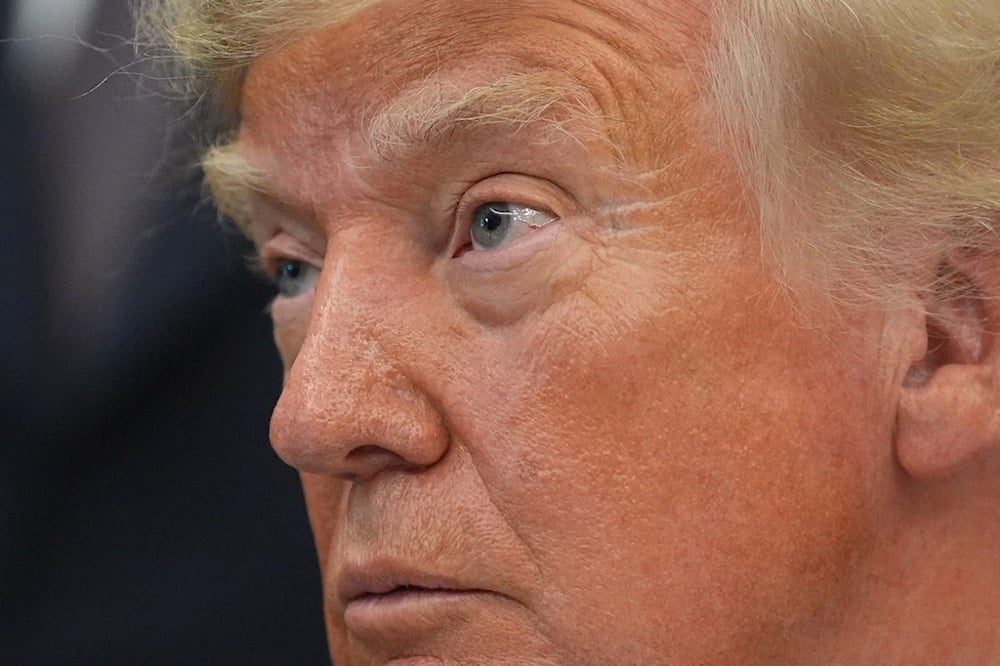
US President Donald Trump speaks in the Oval Office of the White House, Wednesday, Sept. 30, 2026, in Washington. (AP Photo/Alex Brandon)
A Washington Post opinion article by Doug Sosnik, a former senior adviser to former US President Bill Clinton and advisor of the Brunswick Group, argues that the political upheaval surrounding US President Donald Trump's second term could intensify after the 2026 midterm elections.
In the September 30 opinion piece, titled "The Age After Trump is coming. Better buckle up," Sosnik argues that the period following the midterms could mark a transition away from the political era dominated by Trump, while deepening divisions within both the Republican and Democratic parties.
Sosnik argues that a Democratic victory in the House, or potentially the Senate, could deprive Trump of a Congress aligned with his administration.
He further argues that such a result could create a new confrontation over the conduct and outcome of the midterm elections, while Republicans would use the remaining period before a new Congress takes office to advance Trump's legislative priorities.
Among the issues he identifies are government funding, the debt limit, and the Republican-backed Save America Act, which concerns voter identification and registration.
These are Sosnik's projections about possible political developments rather than established outcomes.
Read more: Pentagon unveils AUTOWARCOM to expand AI, drone warfare
Republican divisions after Trump
A central argument in the article is that Trump's political dominance has helped hold together factions within the Republican Party that otherwise have competing interests.
Sosnik argues that the party could become increasingly fragmented as politicians position themselves to shape its direction after Trump.
He cites an August NBC News Decision Desk poll in which 45% of Republicans said they supported the MAGA movement over the Republican Party, using the finding to illustrate what he describes as an existing division between the populist and establishment wings.
The article similarly anticipates greater internal pressure within the Democratic Party if Democrats gain control of Congress.
Democrats face their own internal tensions
Sosnik argues that a Democratic congressional majority would move quickly to exercise oversight and subpoena powers, potentially launching investigations into the Trump administration and the Trump family's business dealings.
He also expects progressive lawmakers to gain greater influence within the Democratic Party.
The author points to the same NBC News Decision Desk poll, which found that 58% of Democrats said they supported progressive causes more than the Democratic Party. Sosnik uses the figure to argue that the party's progressive wing could have substantial leverage in a new Congress.
Populism crosses traditional party lines
Another major theme of the opinion piece is the emergence of overlapping positions among populist figures from both parties.
Sosnik points to figures including Steve Bannon, Tucker Carlson, Bernie Sanders, and Alexandria Ocasio-Cortez and highlights their shared positions on issues including regulation of artificial intelligence, opposition to the war on Iran, drug prices, and credit-card interest rates.
He argues that these converging positions could give populist forces a larger role in debates leading toward the 2028 presidential election, when both parties are expected to face open and competitive presidential primaries.
The 'Age After Trump'
Sosnik describes the two years between the 2026 midterms and the 2028 presidential election as a transition between what he calls the "Age of Trump" and the "Age After Trump."
His central argument is that political instability will remain pronounced even as the Trump era eventually gives way to a new political period.
Sosnik concludes that Trump's political legacy may ultimately be defined less by the creation of a new governing framework than by the dismantling of existing political arrangements, leaving the next president to undertake the task of constructing a new one.
Read more: Perceptions of US media freedom hit record low, Gallup finds


