
Australia explored fuel caps as supplies crunch due to US war on Iran
 6 Min Read
Australia considered emergency fuel rationing measures during the early stages of the fuel supply crisis triggered by the US war on Iran, as the IEA warned global oil markets could tighten sharply by August.
-
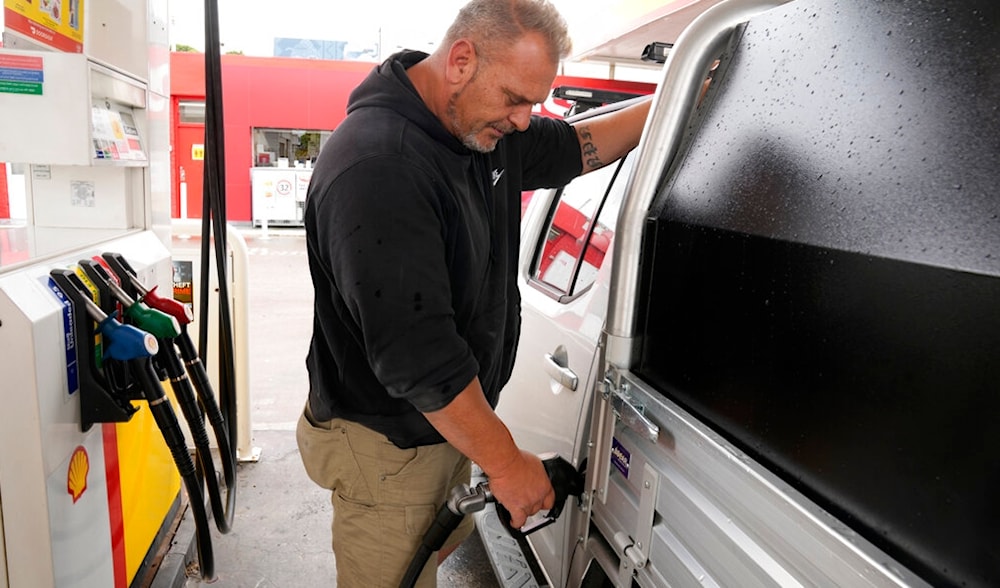
An Australian citizen pumps fuel into his truck at a service station in Sydney, Australia, Tuesday, March 29, 2022. (AP)
The federal government in Australia explored the possibility of retail fuel rationing at the height of an emerging fuel supply crisis earlier this year, according to documents released under freedom of information, as the International Energy Agency (IEA) warned oil markets were heading toward the “red zone” by August.
The Guardian Australia reported, based on internal Department of Climate Change, Energy, the Environment and Water (DCCEEW) papers, that officials examined contingency measures, including limiting how much fuel a single vehicle could purchase per day. One proposal outlined a “maximum transaction value per vehicle per day,” effectively restricting consumer access to fuel during severe shortages.
The documents suggest rationing was treated as a worst-case scenario rather than an imminent policy step, with the government stating it did not expect such measures to be necessary. However, the IEA warning about tightening global supply conditions has raised renewed concerns about fuel availability as West Asian export constraints weigh on markets.
Emergency powers and contingency planning
The documents, covering the period from February 21 to March 17 during the early phase of the US-Israeli war on Iran, show that Australian authorities had begun preparing fallback options in case industry-led supply management proved insufficient.
Under the Liquid Fuels Emergency Act, Energy Minister Chris Bowen holds the authority to declare a liquid fuel emergency, which can include directing fuel distribution and imposing rationing in extreme circumstances.
Despite these powers, both Bowen and Prime Minister Anthony Albanese publicly ruled out fuel rationing at the peak of the crisis. In late March, Bowen said the existing emergency framework, developed in 2006 and containing measures such as restrictions on jerry cans, was only a guideline and would not be implemented in that form.
Internal discussions on rationing scenarios
Minutes from a March 13 meeting of the National Oil Supply Emergency Committee (Nosec) show officials from Victoria raising the prospect of future rationing frameworks and discussing how demand restrictions might be communicated to the public.
Participants also considered how rationing could function under emergency conditions, including messaging strategies designed to avoid triggering public panic.
The meeting concluded that the department should further examine how rationing could be implemented under a declared emergency scenario and how communication would be handled in such an event.
By March 17, internal discussions had progressed further, with Nosec noting plans to begin detailed planning on fuel restrictions while acknowledging sensitivities around signaling such measures publicly.
Earlier documents from March 9 already listed rationing among possible responses to supply disruptions, referencing ministerial powers under the Liquid Fuels Emergency Act, including restricting fuel purchases and directing supply distribution.
Government response and supply measures
While rationing was considered in planning scenarios, the government continued to emphasize voluntary industry management as the primary response mechanism, reserving mandatory intervention for severe breakdowns in supply stability.
Officials also expanded fuel reserves during the crisis period, securing 600 million litres of diesel and 100 million litres of jet fuel through 14 additional cargo shipments sourced from Singapore, China, Brunei, and other suppliers.
The federal budget also included a $10 billion fuel security package aimed at strengthening long-term resilience in national fuel supplies.
Restrictions, market controls, and emergency strategy
A separate internal paper, heavily redacted and titled Background to the National Oil Emergency Demand Restraint Strategy, outlined potential scenarios involving regulated retail rationing.
It suggested that in extreme shortages, authorities could impose controls on wholesale and retail petroleum sales, alongside broader demand-management measures designed to preserve supply for essential users for as long as possible.
The document also reiterated that government preference would be to rely first on market and industry responses before activating ministerial emergency powers.
It stated that mandatory controls would only be introduced if voluntary measures failed to stabilize supply conditions. Under such a framework, consumers could face temporary limits on fuel use depending on the severity and duration of an emergency situation.
State and territory governments, along with industry stakeholders, would be consulted before any such measures were implemented.
Fuel shortages spread across Australia fast
Just weeks into the US-led war on Iran, the repercussions began to hit Australia’s energy system with significant force, exposing the economy to rising fuel pressure and prompting early contingency planning for potential supply shortages.
Dozens of Australian petrol stations ran dry as panic-buying intensified more than two weeks after the closure of the Strait of Hormuz, with regional communities bearing the brunt of a supply crunch that industry groups are warning could threaten food production and rural livelihoods.
By mid-March, 32 service stations across New South Wales were out of at least one fuel type, according to the state government, a figure officials acknowledged was enough to leave single-station towns completely without supply. New South Wales Premier Chris Minns confirmed the state held adequate overall fuel reserves but said distribution to regional areas was being overwhelmed by unexpected surges in local demand.
The shortages spread across state lines. In Victoria, Victorian Farmers Federation President Brett Hosking confirmed entire towns had run dry, naming Wedderburn, Bonnie Doon, and Robinvale among those affected. In Western Australia, the town of Manjimup saw two stations exhaust their supply on Friday, with industrial fuel suppliers capping sales at 10,000 litres per customer.
At the time, the federal government authorized fuel companies to release approximately one-fifth of their mandatory stockpiles and temporarily sell lower-grade petrol, with regional Australia designated a priority.
Read more: US weighs new Russian oil fee waiver amid global supply strain


