
Eurozone growth cut as war on Iran fuels energy shock fears
 4 Min Read
The European Commission warned that the Iran war-driven energy shock is fueling inflation, weakening economic activity, and increasing stagflation risks across Europe.
-
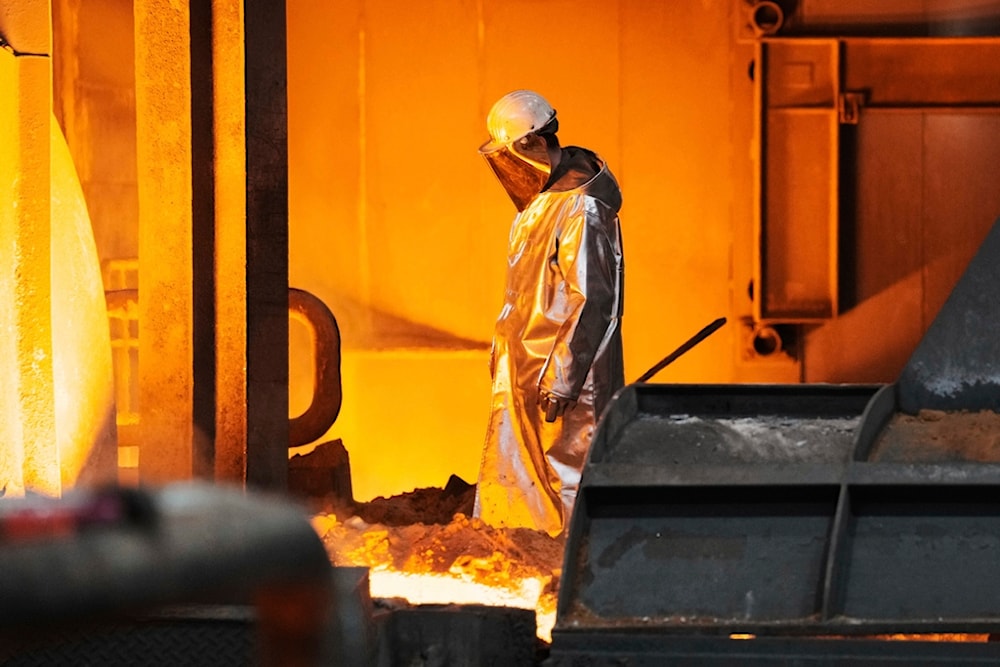
A steelworker is seen at the Thyssenkrupp steelworks in Duisburg, Germany, after the EU Steel Action plan was presented, Thursday, March 20, 2025 (AP)
The European Commission sharply lowered its growth outlook for the eurozone while warning that the ongoing war on Iran is driving a new energy shock across Europe, raising inflationary pressures, and increasing fears of stagflation in the bloc.
According to updated forecasts released by the Commission and cited by Bloomberg, the eurozone economy is now expected to grow by 0.9% in 2026, down from the 1.4% expansion recorded last year and below earlier projections issued in November. Growth for 2027 was also revised downward to 1.2%.
At the same time, inflation across the single-currency area is projected to average 3% this year, significantly above the European Central Bank target of 2% and notably higher than the 1.9% forecast published previously. Price growth is expected to moderate slightly to 2.3% next year.
European officials warned that a prolonged war on Iran could deepen the crisis further by extending disruptions to energy markets and weighing more heavily on economic activity.
“The conflict in the Middle East has triggered a major energy shock, further testing Europe as it navigates an already volatile geopolitical and trade environment,” Economy Commissioner Valdis Dombrovskis told Bloomberg.
Stagflation risks rise
The updated outlook reflects mounting concern among European policymakers that rising fuel and transport costs linked to the war are beginning to spread through the broader economy, affecting consumers, manufacturing, and business activity.
Dombrovskis has repeatedly warned that Europe risks entering a stagflationary environment marked by weak growth alongside persistent inflation, although ECB President Christine Lagarde has rejected characterizing the situation that way.
The deteriorating economic outlook is also complicating the ECB’s monetary policy path. With inflation remaining elevated, pressure is increasing for additional interest rate hikes, yet tighter borrowing conditions could further slow already fragile economic growth.
Most economists surveyed by Bloomberg expect the ECB to raise rates again next month, with additional increases potentially following later this year.
Energy shock fears
Fresh economic surveys published Thursday added to concerns over the region’s slowdown, indicating that private-sector activity in the eurozone contracted in May at the fastest pace in more than two years. Both Germany and France are now facing growing risks of economic contraction during the second quarter.
Germany, Europe’s largest economy, saw its 2026 growth projection cut in half to 0.6%, while expectations for 2027 were revised down to 0.9%. The German government recently lowered its own forecast as well, dealing a setback to Chancellor Friedrich Merz, who had earlier promised a return to stronger economic growth.
Although Berlin continues to rely on large-scale defense and infrastructure spending to support activity, officials increasingly fear that those measures are being outweighed by the economic fallout from war-related energy disruptions and broader trade tensions.
Germany’s central bank also cautioned Thursday that economic activity will likely remain largely stagnant during the current quarter, noting that the ongoing conflict is “likely to have a broader and more noticeable impact” depending on how long hostilities continue.
Meanwhile, France’s economy is projected to grow 0.8% this year and 1.1% in 2027, but surveys indicated business activity there declined at the sharpest pace in more than five years as elevated energy prices pressured households and companies.
Europe faces stagflation
Several European governments, including Germany’s, have already introduced fuel subsidies, tax reductions, and price support measures to cushion the impact on consumers and businesses. However, the scale of intervention remains considerably smaller than the emergency spending programs launched after the 2022 Ukraine war energy crisis, when eurozone inflation surged to record highs above 10%.
“The EU must learn from past crises by keeping fiscal support temporary and targeted,” Dombrovskis said, while also urging faster efforts to reduce Europe’s dependence on imported fossil fuels.
The Commission additionally warned that the latest energy shock is worsening fiscal pressures across the bloc, forecasting that the EU’s overall government deficit will rise from 3.1% of GDP in 2025 to 3.6% by 2027.
“This reflects higher primary deficits and an increasingly unfavorable interest-growth differential,” the Commission said.
Read more: EU fuel import bill rises €25bn due to war on Iran, says von der Leyen


