
Trump's abrupt moves spark growing frustration among GOP Senators
 4 Min Read
GOP lawmakers warn that Trump's last-minute decisions are disrupting efforts to advance the party's legislative agenda.
-
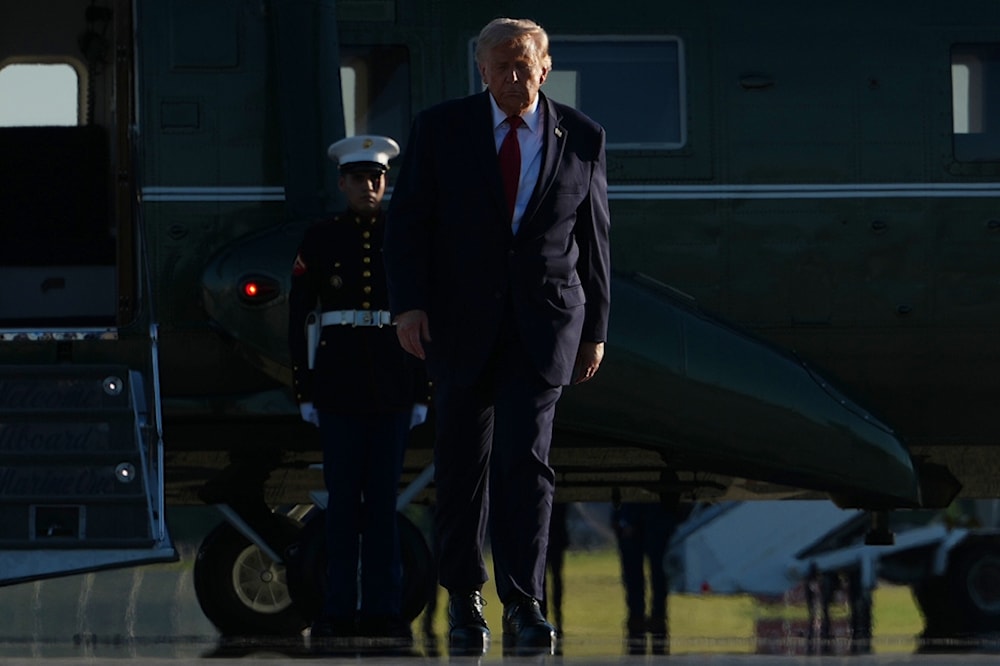
US President Donald Trump disembarks Marine One before boarding Air Force One at Geneva Airport, following the G7 summit, Wednesday, June 17, 2026, in Geneva, Switzerland (AP)
Signs of tension between US President Donald Trump and Senate Republicans intensified on Wednesday as several GOP lawmakers openly criticized what they described as poor coordination from the White House, arguing that last-minute decisions are complicating efforts to advance the party's legislative agenda ahead of the midterm elections, Politico reported.
The latest dispute followed Trump's early-morning announcement reversing course on the nomination of Jay Clayton for director of national intelligence, only hours before the Senate Intelligence Committee was due to consider his confirmation.
The move disrupted Republican plans to quickly confirm Clayton and proceed with legislation to renew key surveillance authorities under the Foreign Intelligence Surveillance Act (FISA), prompting unusually candid reactions from several senators.
"The president's timing and communication needs improvement," Senator Shelley Moore Capito told Politico.
"I think it's unfortunate. It throws a kicker into the system when we get going and then we have to readjust."
Asked about dissatisfaction within the Republican conference over recent coordination with the White House, Senator John Kennedy responded, "Well, duh."
When questioned whether Trump takes senators' concerns into account, Kennedy replied, "No, I don't. He wants what he wants, and until he gets it, he just keeps pushing."
Lawmakers voice broader frustrations
The disagreement comes as Republicans seek to secure a series of legislative victories before campaigning intensifies for November's midterm elections.
According to lawmakers, Trump's unexpected policy shifts have repeatedly interrupted negotiations that were close to completion.
Among the recent flashpoints cited by senators were the administration's now-abandoned proposal for a $1.8 billion "Anti-Weaponization Fund", disputes over immigration legislation, and continued pressure from Trump to eliminate the Senate filibuster in order to pass additional Republican priorities.
Another recurring source of disagreement has been Trump's insistence that Republicans pass the SAVE America Act, an elections bill that many Senate Republicans privately acknowledge lacks sufficient support to clear the chamber.
During a closed-door Republican lunch on Wednesday, several senators reportedly criticized colleagues for raising unrealistic expectations regarding the bill's prospects.
Without naming anyone directly, Senator John Cornyn warned against "making unrealistic promises and then when they're not obtained, criticizing one another."
Cornyn also acknowledged that Trump's approach had become the source of "some frustration" within the Republican conference over "basically being able to function."
White House seeks to downplay tensions
Senator Thom Tillis argued that stronger cooperation between the White House and Congress would help Republicans achieve the administration's own objectives.
"Look, we are not the manufacturing department of the Article II branch — we are the board of directors for the Article II branch," Tillis said.
"You start treating us like that, coordinating with us like that, we won't have these embarrassing setbacks."
Senate Majority Leader John Thune sought to minimize the public dispute while recognizing that unexpected developments do occur.
"The president has his own mind, makes his own decisions, so do we," Thune said.
He later added that the White House and Senate Republicans maintain "a fair amount of coordination."
"But sometimes you get surprised," he said. "It's a business model the White House employs, and we've had to figure out how to be adaptable."
The White House dismissed suggestions of a widening rift, saying the administration has worked closely with Senate Republicans throughout Trump's second term.
"We look forward to continuing these close relationships and fulfilling President Trump's priorities that Americans elected him to enact," White House spokesperson Abigail Jackson said.
Despite the public criticism, several Republican senators indicated they did not view the disagreements as personal, instead describing them as differences over strategy while maintaining support for the administration's broader policy agenda.
Read more: Trump says 'unfair' for Iran to be barred from ballistic missiles


