
Vessel runs aground after deviating from Iran-designated Hormuz route
 3 Min Read
A foreign container ship ran aground in the Strait of Hormuz after reportedly deviating from Iran's approved navigation route as commercial traffic through the waterway remains sharply reduced.
-
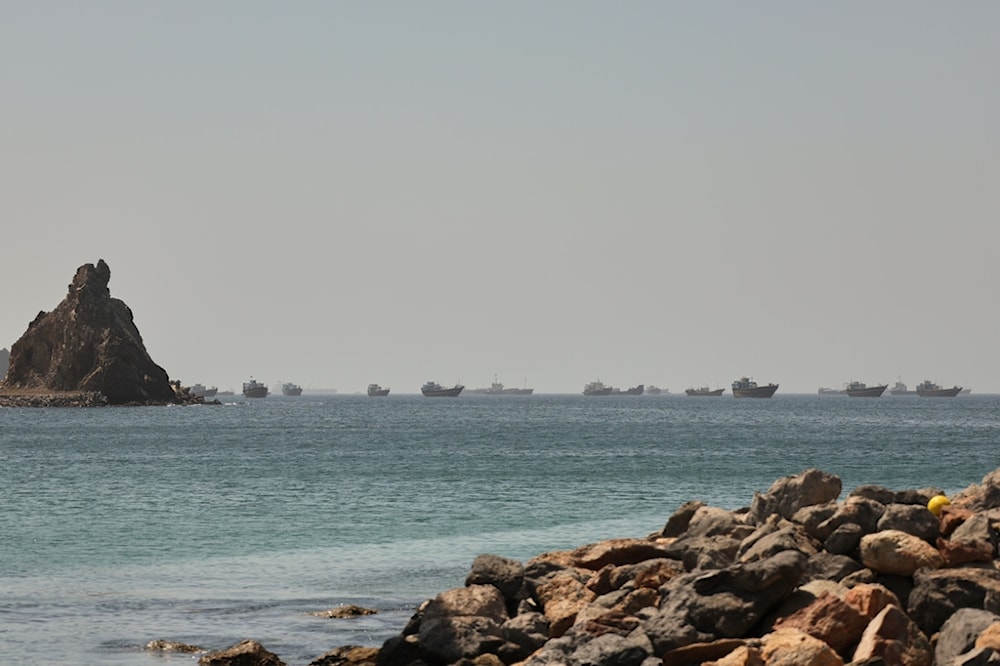
Tankers and cargo vessels are seen in the Gulf of Oman, along shipping routes linking the Strait of Hormuz and the Arabian Sea, Tuesday, June 16, 2026 (AP)
A cargo vessel ran aground in the Strait of Hormuz on Wednesday while traveling a route not approved by Iran's naval authorities, Iran's IRIB reports.
The ship was identified as a foreign container ship, but the report didn't provide any further details on the matter.
🎥 به گل نشستن شناور متخلف در تنگۀ هرمز
— خبرگزاری فارس (@FarsNews_Agency) July 1, 2026
یک فروند کشتی که از مسیری غیر از مسیر تعیین شده در قالب نظم ایرانی در تنگه هرمز، تردد میکرد، به گل نشسته است. pic.twitter.com/8iGFMEG1Yn
IRIB's report seems to underscore Iran's geographical control over the strategic waterway, through which a fifth of all oil and gas passes.
According to HormuzTracker, the Strait of Hormuz remains severely disrupted, showing little to no passage through the key waterway.
This confirms a total halt in detected commercial navigation activity, with no crude oil tankers, LNG carriers, bulk carriers, or container ships recorded moving through the Strait.
Transit through the Strait fell sharply following waves of US aggression against Iran and subsequent hostile rhetoric from Washington. Trackers showed that between June 24 and June 28, vessels passing through the Strait of Hormuz fell from a high of 74 to 22.
Read more: US-Israeli war on Iran derails US-Saudi relations: WSJ
Oman proposes Hormuz passage fees
During the 60-day war that began on February 28, Iran repeatedly emphasized that its geographic position gives it decisive influence over the Strait of Hormuz, framing control of the waterway as part of its response to US and Israeli aggression.
As indirect negotiations between Tehran and Washington continue over implementing a comprehensive regional ceasefire, Iranian officials have maintained that navigation through Hormuz will be governed according to arrangements agreed upon by regional states rather than fall beholden to Washington's demands.
According to the New York Times, Oman has proposed establishing a legal framework that would require vessels transiting the Strait to pay passage fees. The proposal would mark a departure from longstanding US demands that commercial navigation through Hormuz remain free of transit charges.
The reported initiative reflects broader regional efforts to reshape maritime governance following the recent conflict while reinforcing the strategic significance of one of the world's busiest shipping corridors.
Iran, Oman hold first Strait of Hormuz joint committee meeting
In this context, Iran and Oman held the first meeting of their joint committee on the Strait of Hormuz on June 29, marking a new chapter in bilateral cooperation over the management of one of the world's most strategic maritime chokepoints.
In a post on X, Kazem Gharibabadi, deputy foreign minister for legal and international affairs, said the meeting was held during his visit to Muscat with Abdulaziz Al-Hinai, ambassador-at-large at the Omani Foreign Ministry.
در سفر به مسقط، اولین نشست کمیته مشترک هرمز با عبدالعزیز الهنایی، وزیر مشاور در امور خارجه عمان برگزار شد. ضمن مرور مسائل جاری در رابطه با تنگه، درباره مدیریت آینده تنگه در چارچوب بند پنج یادداشت تفاهم اسلام آباد و حقوق حاکمیتی دولتهای ساحلی تبادل نظر کردیم. pic.twitter.com/m26EBHWwhn
— Gharibabadi (@Gharibabadi) June 29, 2026
According to Gharibabadi, the discussions emphasized a governance framework that duly considers the rights and interests of all littoral states bordering the strategic waterway, within the framework of Article 5 of the Islamabad Memorandum of Understanding.
“While reviewing current issues related to the strait, we exchanged views on the future management of the strait within the framework of Article 5 of the Islamabad Memorandum of Understanding and the sovereign rights of littoral states,” he said.
"The talks focused on cooperative management mechanisms that uphold the legitimate rights of the coastal nations while ensuring the strait remains a secure and stable passage," Gharibabadi added.
Read more: Oil slips as Iran rejects direct US meeting in Qatar


