
South Korea secures oil bypassing Hormuz despite US blockade risks
 4 Min Read
South Korea secures 273 million barrels of crude via alternative routes, reducing reliance on the Strait of Hormuz.
-
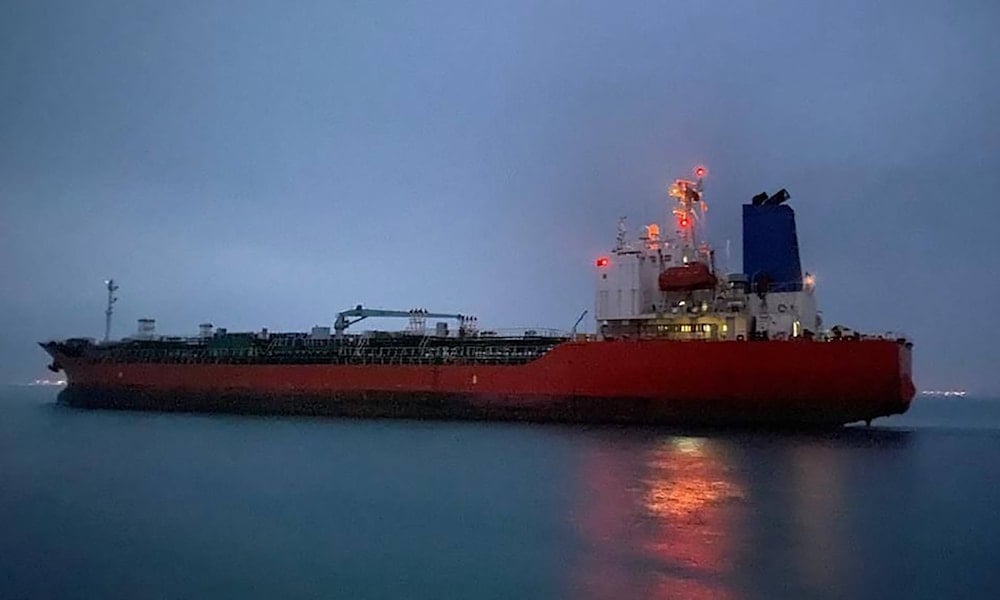
The South Korean-flagged tanker Hankuk Chemi leaves the Iranian port of Rajai on April 9, 2021. (South Korean Foreign Ministry/AFP/Getty Images)
South Korea has secured 273 million barrels of crude oil through alternative routes that bypass the Strait of Hormuz, in a strategic move aimed at shielding its economy from escalating disruptions linked to the ongoing regional conflict.
The announcement was made by the South Korean President's Chief of Staff, Kang Hoon-sik, following a high-level diplomatic tour across key energy-producing states, including Kazakhstan, Oman, Saudi Arabia, and Qatar.
Seoul also secured 2.1 million metric tons of naphtha, reinforcing efforts to stabilize domestic supply chains amid mounting geopolitical uncertainty.
Alternative routes reduce exposure to maritime disruptions
“In particular, the crude oil and naphtha secured this time will be sourced through alternative supply routes unrelated to closure of the Strait of Hormuz,” Kang stated, emphasizing that the move would “make a direct and tangible contribution to stabilising domestic supply.”
The secured volumes are sufficient to sustain South Korea’s economy for more than three months under normal conditions, based on previous consumption levels.
Read more: TotalEnergies CEO: Hormuz toll better than closure
Saudi Arabia has committed to supplying a significant share of the secured crude, including approximately 50 million barrels already allocated and redirected through Red Sea export terminals.
Riyadh has also pledged to prioritize South Korean companies in allocating an additional 200 million barrels through the end of the year, alongside expanded naphtha deliveries.
Other suppliers include Kazakhstan, which is expected to provide 18 million barrels, and Oman, which has committed 5 million barrels of crude and 1.6 million tons of naphtha.
These agreements highlight deepening energy cooperation between Seoul and major producers as global supply chains adapt to shifting geopolitical conditions.
Energy security concerns drive urgent diplomacy
South Korea’s heavy dependence on the Strait of Hormuz, accounting for 61% of crude oil imports and over half of naphtha imports, has heightened the urgency of diversification efforts.
Officials described the diplomatic mission as driven by an “economic emergency” tied to the regional conflict and its impact on energy flows.
President Lee Jae Myung reportedly conveyed concerns over the prolonged instability in communications with regional leaders, calling for coordinated responses to safeguard energy security.
Infrastructure plans to bypass chokepoints
In parallel with supply agreements, South Korea is exploring longer-term solutions to mitigate reliance on vulnerable maritime routes.
Discussions with Gulf producers have included proposals for bypass pipelines and expanded storage infrastructure outside the Strait of Hormuz. Domestic efforts to increase oil storage capacity are also underway, with potential for joint stockpiling arrangements involving producer states.
These measures reflect a broader shift toward structural resilience, as states seek to insulate their economies from disruptions linked to geopolitical conflict.
US Strait of Hormuz blockade failure
The US blockade of the Strait of Hormuz showed itself to be less than totally secure. Iranian-linked vessels have continued to transit the waterway according to maritime tracking data.
According to a CBS News report, multiple tankers were observed navigating the strait, among them the Christianna, which had previously been halted at the Iranian port of Bandar Imam Khomeini before continuing its journey, while the Ladonna, which had remained docked at the same port for days, activated its tracking system and proceeded into the Gulf.
Other vessels present in the data include the Murlikishan, another tanker sanctioned by the US over alleged links to Iran, and the Peace Gulf, which is not currently sanctioned but had made a port call in Iran late last year. Both vessels were tracked moving through the waterway overnight.
Similarly, the Rich Starry, sanctioned under a different name, and the Elpis, another tanker believed to have departed from Bushehr, were also recorded transiting the Strait after the blockade took effect.


